

Regenerator Refractory Bricks
Zoned for three temperatures — chrome corundum cylinders for the hot and condensation zones, sillimanite and magnesia for structural support.
The regenerator is where a glass furnace recovers its heat — and where the most complex refractory problem in the whole tank sits. A single chamber spans three temperature zones, each with a completely different failure mechanism, which is why no single brick can line a regenerator well.
XZK Group manufactures the full set of regenerator refractories from our Xinmi plant in Henan: cylindrical chrome corundum brick and mullite checker for the hot and condensation zones, sillimanite and andalusite for the rider arch and structural courses, and high-purity magnesia for the top courses and target walls.
Because the zones impose different loads, we supply regenerators as a configuration rather than a product list — each zone matched to the mechanism that will actually decide its life.
Why the Regenerator Needs Three Different Bricks
A regenerator works by passing hot flue gas through a lattice of refractory, storing heat in the brickwork, then reversing the flow so incoming combustion air picks that heat back up. The brick sees two very different atmospheres alternately, and its temperature varies by height by hundreds of degrees.
That temperature gradient is what creates three distinct duty zones — and three distinct failure mechanisms.
The three-zone duty cycle
Above 1100°C, checker bricks absorb severe thermal shock and face high-velocity alkali vapour and batch dust scouring directly. Between 800 and 1100°C, volatile alkali reacts with sulphur oxides to form sulphate condensates that corrode brick and progressively block the flues. Below 800°C, the checkerwork must simply carry the accumulated mechanical load of everything above it — hundreds of tonnes — without creeping. A brick that is excellent in one zone can be the wrong choice in another.
Types and Grades of Regenerator Bricks
Four families cover regenerator duty. Cylindrical (barrel-shaped) bricks are used where the geometry itself contributes to performance — giving a larger heat transfer surface and a controlled flue path.

Hot & condensation zones
Cylindrical Chrome Corundum Brick
XZK-CC10 · CC12 · CC15 · CC30
Barrel-shaped chrome corundum brick combining 10–30% Cr2O3 with high alumina. The cylindrical form increases the heat transfer surface per unit volume and resists the alkali scouring and sulphate attack that dominate the upper two zones.
Cr2O3 10–30% · RUL ≥ 1700°C · Thermal shock ≥ 12 cycles

Structural courses
Cylindrical Sillimanite Brick
XZK-SL57-P · SL60-P · SL65-P · SL60-C
Sillimanite converts to mullite in service, producing a volume-stable brick with excellent creep resistance. Used in structural courses and the rider arch, where load carrying matters more than chemical resistance.
Al2O3 ≥ 57–65% · RUL ≥ 1550–1650°C · Thermal shock ≥ 15–25 cycles

Checkerwork
Mullite Checker Brick
XZK-ML70-A · ML70-B · ML65-C
Dense mullite checker brick for the condensation and lower courses. Low creep rate under sustained load is the decisive property — the checkerwork must remain dimensionally stable under accumulated weight for years.
Al2O3 ≥ 65–70% · RUL ≥ 1600–1700°C · CCS ≥ 75–80 MPa
Top courses & target walls
High-Purity Magnesia Brick
XZK-HPM magnesia series
Magnesia has the highest resistance to alkali attack of any common refractory. A regenerator casing combining a magnesia crown with magnesia walls offers the best cost-performance ratio of the standard material concepts, and low-creep grades are used where crown load is significant.
High alkali resistance · low creep grades available · suited to top courses and target walls
Rider arch
Andalusite and Sillimanite Rider Bricks
XZK-AN57-P · AN60-P · AN65-P
The rider arch is the foundation the entire checkerwork stands on. Andalusite and sillimanite rider bricks are specified for ultimate creep resistance, because this structure cannot be replaced during a campaign.
Al2O3 ≥ 57–65% · Creep ≤ 0.8% at 1300–1550°C
Anti-clogging
Oversize-Channel Checker Shapes
Large-channel configurations
Where flue blockage is a known risk, checker shapes with enlarged channels can double or quadruple the flue size in the condensation zone. This lowers blockage risk substantially and makes thermal cleaning practical.
Configurations available to double or quadruple standard flue area in the condensation zone.
Technical Specifications
Regenerator grades are compared on refractoriness under load, creep rate and thermal shock resistance together. A brick that leads on one figure and trails on another may be the wrong choice for the zone you have in mind.
Chrome corundum and mullite for the hot and condensation zones
| Property | XZK-CC10 | XZK-CC12 | XZK-CC15 | XZK-CC30 |
|---|---|---|---|---|
| Al2O3 (%) | ≥ 83.0 | ≥ 80.0 | ≥ 78.0 | ≥ 62.0 |
| Cr2O3 (%) | ≥ 10.0 | ≥ 12.0 | ≥ 14.5 | ≥ 30.0 |
| Bulk density (g/cm3) | ≥ 3.25 | ≥ 3.25 | ≥ 3.25 | ≥ 3.40 |
| Apparent porosity (%) | ≤ 17 | ≤ 17 | ≤ 17 | ≤ 17 |
| Cold crushing strength (MPa) | ≥ 100 | ≥ 100 | ≥ 100 | ≥ 100 |
| Refractoriness under load (0.2 MPa, °C) | ≥ 1700 | ≥ 1700 | ≥ 1700 | ≥ 1700 |
| Thermal shock, 950°C air-cooled (cycles) | ≥ 12 | ≥ 12 | ≥ 12 | — |
Sillimanite and andalusite for structural courses and rider arch
| Property | XZK-SL57-P | XZK-SL60-P | XZK-SL65-P | XZK-AN65-P |
|---|---|---|---|---|
| Al2O3 (%) | ≥ 57.0 | ≥ 60.0 | ≥ 65.0 | ≥ 65.0 |
| Fe2O3 (%) | ≤ 1.2 | ≤ 1.0 | ≤ 1.0 | ≤ 1.0 |
| Bulk density (g/cm3) | ≥ 2.40 | ≥ 2.45 | ≥ 2.50 | ≥ 2.50 |
| Apparent porosity (%) | ≤ 18 | ≤ 18 | ≤ 17 | ≤ 17 |
| Cold crushing strength (MPa) | ≥ 70 | ≥ 70 | ≥ 70 | ≥ 70 |
| Refractoriness under load (0.2 MPa, °C) | ≥ 1560 | ≥ 1580 | ≥ 1650 | ≥ 1650 |
| Thermal shock, 1100°C water-cooled (cycles) | ≥ 25 | ≥ 20 | ≥ 15 | ≥ 15 |
Mullite checker brick
| Property | XZK-ML70-A | XZK-ML70-B | XZK-ML65-C |
|---|---|---|---|
| Al2O3 (%) | ≥ 70 | ≥ 70 | ≥ 65 |
| Fe2O3 (%) | ≤ 1.2 | ≤ 0.2 | ≤ 0.8 |
| Bulk density (g/cm3) | ≥ 2.55 | ≥ 2.65 | ≥ 2.50 |
| Apparent porosity (%) | ≤ 18 | ≤ 17 | ≤ 17 |
| Cold crushing strength (MPa) | ≥ 80 | ≥ 80 | ≥ 75 |
| Refractoriness under load (0.2 MPa, °C) | ≥ 1620 | ≥ 1700 | ≥ 1600 |
Test methods follow GB/T and ISO practice; ASTM equivalents and full certificates of analysis are issued with every shipment.
Configuring the Three Temperature Zones
A regenerator is specified zone by zone. The table below reflects the configuration logic our engineers apply — denser and more corrosion-resistant material at the top, low-creep structural material at the bottom.
Hot zone — above 1100°C
The top courses face severe thermal shock from every reversal, plus direct scouring by high-velocity alkali vapour and batch dust. Chemical resistance and thermal shock tolerance both matter here, which is what makes chrome corundum the standard choice. Magnesia grades with high alkali resistance are used in the topmost courses and the crown of the casing.
Typical grades: XZK-CC15 / CC30 (cylindrical), high-purity magnesia for crown courses
Condensation zone — 800 to 1100°C
This is where the regenerator fails most often. Volatile alkali condenses with sulphur oxides to form sulphate salts whose volume expansion both corrodes the brick and physically blocks the flues. Chrome corundum resists the attack; where blockage risk is high, oversize-channel checker shapes raise the flue area and allow thermal cleaning.
Typical grades: XZK-CC10 / CC12 (cylindrical), oversize-channel checker configurations
Bottom courses — below 800°C
By the time gas reaches the bottom, its temperature is low but the mechanical load is at its maximum: the entire checkerwork above presses down on these courses. Creep resistance, not chemical resistance, is the decisive specification.
Typical grades: XZK-ML70-B, XZK-SL65-P
Rider arch and chamber foundation
The rider arch carries the checkerwork from below. It is unreachable during a campaign, so creep resistance over years is the only figure that matters. Andalusite and sillimanite grades are specified because they hold their dimensions under sustained load at temperature.
Typical grades: XZK-AN65-P, XZK-SL65-P, XZK-ML70-B
Casing — outer wall, division wall and target wall
The casing material selection depends on application temperature, carry-over and atmosphere. Magnesia offers the highest alkali resistance for high-temperature and crown applications; mullite suits conditions with strong sand carry-over and lower alkali content. A magnesia casing typically delivers the best cost-performance ratio of the standard concepts.
Typical grades: Magnesia series (crown and target walls), XZK-ML70-B (division and outer walls)
Where sand carry-over is heavy
In furnaces with strong batch dust carry-over and lower alkali content, mullite bricks perform well in the first chambers. Where both carry-over and alkali are significant, magnesia-zircon grades are used for target walls.
Typical grades: XZK-ML70-A / ML70-B, magnesia-zircon for target walls
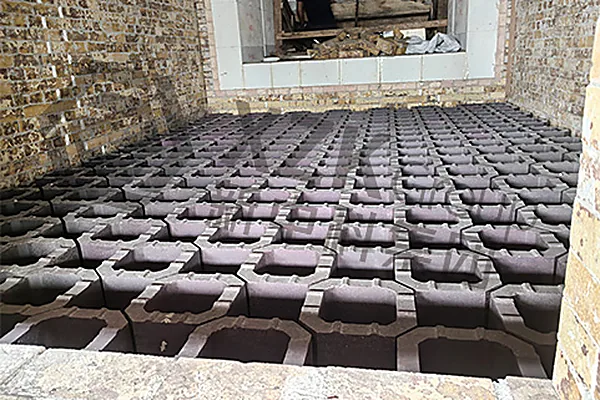
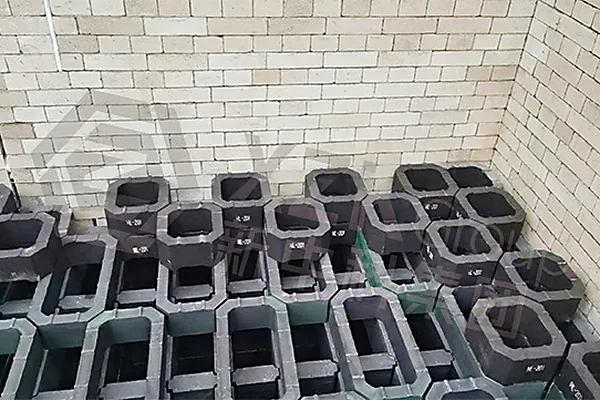
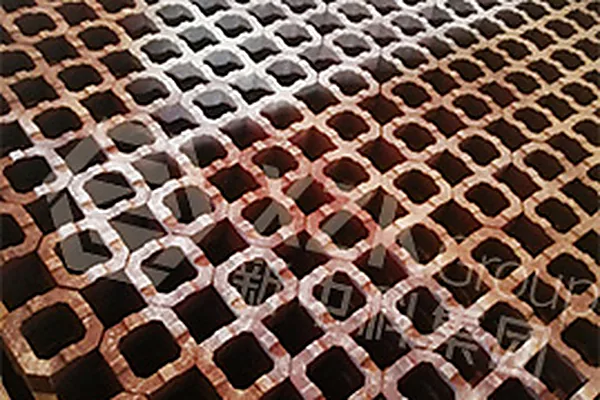
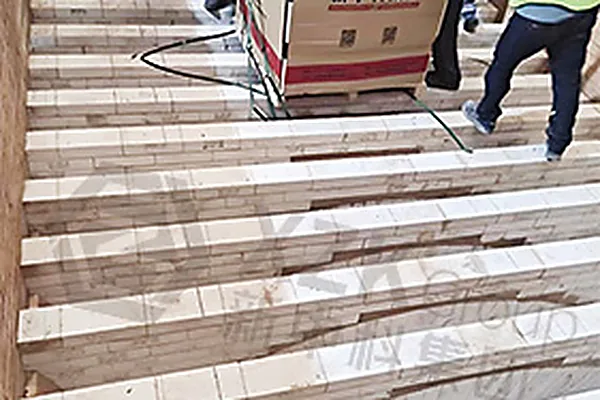
On Site — Regenerator and Checkerwork
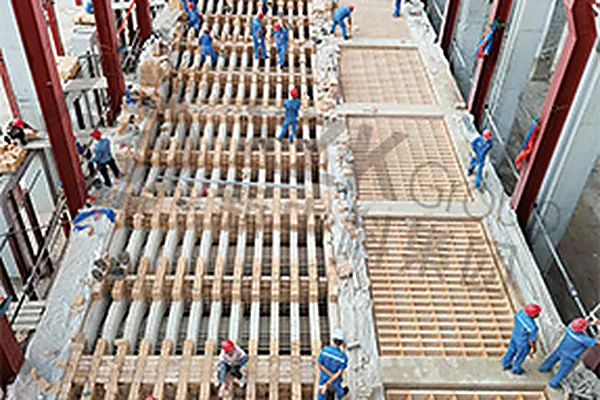
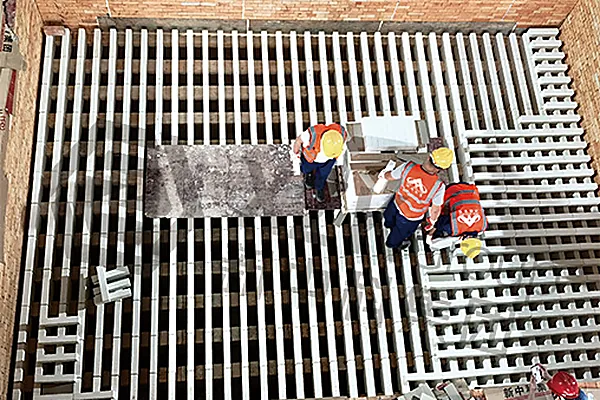
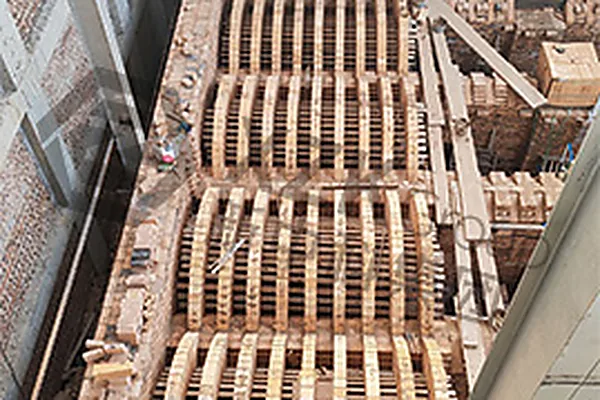
Checkerwork, port crowns and the support structure, photographed during construction and after completion across several furnaces.
Regenerator Failure Mechanisms and Solutions
Regenerator life is set by whichever of five mechanisms reaches the brickwork first. Each is handled by a different material or geometry decision.
How to Specify a Regenerator Configuration
Specify by zone, not by product. The most common cause of a short regenerator campaign is applying one premium grade throughout, when the zones actually need different materials.
| Zone | Temperature | Dominant mechanism | Specify |
|---|---|---|---|
| Top courses and crown | > 1100°C | Alkali scour + thermal shock | Chrome corundum / high-purity magnesia |
| Upper checkerwork | > 1100°C | Alkali vapour + dust abrasion | XZK-CC15 / CC30 cylindrical |
| Condensation zone | 800–1100°C | Sulphate attack + blockage | XZK-CC10 / CC12 cylindrical |
| High clogging risk | 800–1100°C | Flue blockage | Oversize-channel checker shapes |
| Bottom courses | < 800°C | Creep under load | XZK-ML70-B / SL65-P |
| Rider arch | < 800°C | Creep under heavy load | XZK-AN65-P / SL65-P |
| Heavy sand carry-over | any | Abrasion | XZK-ML70-A dense mullite |
| Target wall, alkali + carry-over | > 1100°C | Combined attack | Magnesia-zircon grades |
Three practical rules:
- Do not use one grade across the whole regenerator. The three zones impose different mechanisms. Chrome corundum in the hot and condensation zones with mullite or sillimanite structural courses below is usually both cheaper and longer lasting than a single premium grade throughout.
- Creep is the specification that matters at the bottom. Refractoriness under load tells you about the top of the regenerator; creep rate tells you what happens at the bottom after three years. Ask for both figures before specifying structural courses.
- Treat clogging as a design problem, not a maintenance one. Where flue blockage is likely, enlarged-channel checker shapes in the condensation zone reduce the risk at the design stage — far cheaper than dealing with a blocked regenerator mid-campaign.
Manufacturing and Quality Control
Checker bricks must fit together precisely, because an irregular lattice produces an irregular flue path and unpredictable heat transfer. Dimensional control is as important as chemistry.
Four automatic batching lines feed 20 CNC presses ranging from 630 to 2000 tonnes, so brick density is controlled by press force rather than operator judgement. Firing runs through four 108-metre fully automatic tunnel kilns and five ultra-high-temperature shuttle kilns, giving the uniform soak these materials need to complete densification.
Quality control covers the full chain: incoming raw material assay, in-process density and dimensional checks, and finished-brick testing for bulk density, apparent porosity, cold crushing strength and refractoriness under load. Every shipment leaves with a certificate of analysis.
Cylindrical and shaped checker bricks are pressed on CNC presses and finished to tight dimensional tolerance. Chrome corundum bodies are fired to a controlled curve so the Cr2O3 phase is fully stabilised, and sillimanite grades are fired to complete the mullitisation reaction that gives them their creep resistance.
XZK Group holds ISO 9001, ISO 14001, ISO 45001 and ISO 50001 certification, is recognised as a National High-Tech Enterprise, and operates the Henan Provincial Engineering Technology Research Centre for Sintered Refractories for Glass Furnaces. We have contributed to standards including JC/T 2574-2020 (Sillimanite bricks for glass furnaces), GB/T 4984-2023 (chemical analysis methods for zirconium-containing refractories) and T/CSTM 00853-2024 (chrome-zirconia-corundum bricks for glass furnace regenerators).
Industries We Serve
Glass
Regenerator checkerwork, rider arches, target walls and casing in float, container and fibre glass furnaces — supplied as a zoned configuration.
Iron and steel
Hot blast stove checkerwork and regenerator linings, where the same three-zone logic applies with different temperature ranges.
Ceramics
Shuttle kiln and tunnel kiln recuperator systems where heat recovery performance depends on checker geometry and stability.
Petrochemical and power
Regenerative heat exchangers and high-temperature process equipment subject to cyclic thermal loading.
Frequently Asked Questions
Why are cylindrical (barrel-shaped) bricks used in regenerators?
Shape contributes to performance. A cylindrical brick presents more heat transfer surface per unit volume than a rectangular one and produces a more uniform flue path through the checkerwork. That raises regenerator efficiency and helps keep the thermal profile predictable across the chamber.
What is the biggest cause of regenerator failure?
Sulphate condensation in the 800–1100°C zone. Alkali vapour reacts with sulphur oxides to form sulphate salts whose volume expansion blocks flues and attacks brick. It is a chemical and a mechanical problem at the same time, which is why both material selection and checker geometry matter.
Chrome corundum or magnesia for the top courses?
Both are used, for different reasons. Chrome corundum offers the best combination of thermal shock resistance and alkali resistance, making it the standard for upper checkerwork. High-purity magnesia offers the highest alkali resistance of any common refractory and is used in the topmost courses and crown of the casing, especially at very high gas temperatures.
How do I reduce the risk of flue blockage?
Oversize-channel checker shapes in the condensation zone. Configurations are available that double or even quadruple the flue size relative to standard checker brick, which substantially reduces blockage risk and makes thermal cleaning practical. This is a design decision — best made before the campaign starts.
Which brick should I use for the rider arch?
Andalusite or sillimanite with the lowest creep rate available. The rider arch carries the entire checkerwork and cannot be accessed during a campaign, so dimensional stability under sustained load is the only specification that matters. We typically recommend our AN65 or SL65 pressed grades for this position.
Can you supply a complete regenerator configuration, not just bricks?
Yes. We prefer to. Send us your regenerator dimensions, gas temperatures, batch composition and carry-over conditions, and our engineers will propose a zone-by-zone material configuration with the relevant performance figures for each zone.
What is your minimum order quantity and lead time?
Checker bricks are ordered by chamber volume, so quantities are normally measured in tonnes rather than pieces. Typical lead time is 25–40 days for standard grades. Shaped and cylindrical configurations may require tooling — send drawings for confirmation.
Why Buy Regenerator Bricks from XZK Group
A regenerator is a system, and we supply it as one. Chrome corundum cylinders, sillimanite structural courses, mullite checker and magnesia top courses all come from our own plant, so the zones are designed to work together rather than assembled from whatever grades happen to be in stock.
Our application engineers work from your furnace data — gas temperatures, carry-over conditions, batch chemistry — not from a catalogue. Where clogging risk is significant, we will propose geometry changes at the design stage rather than material upgrades after the fact.
Get your regenerator configured — free
Send us your chamber dimensions, gas temperatures and carry-over conditions. Our engineers will propose a zone-by-zone configuration with performance figures for each zone, and return a quotation within 24 hours.
Related refractory products
Regenerator refractories are specified as a complete zone-by-zone system, together with cylindrical chrome corundum bricks, cylindrical sillimanite bricks, chrome corundum bricks, sillimanite bricks, andalusite bricks, mullite checker bricks, magnesia bricks and low porosity fire clay bricks. Browse all refractory products or see the magnesia series for zoning guidance.
 WhatsApp
 WeChat
 WhatsApp
 WeChat