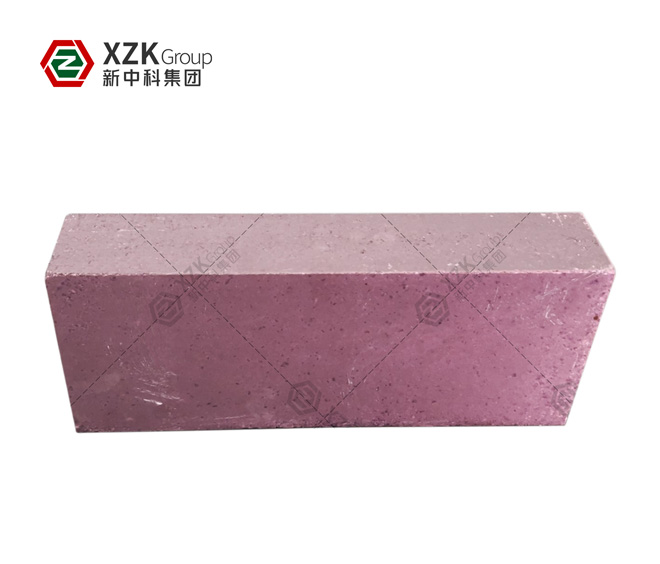
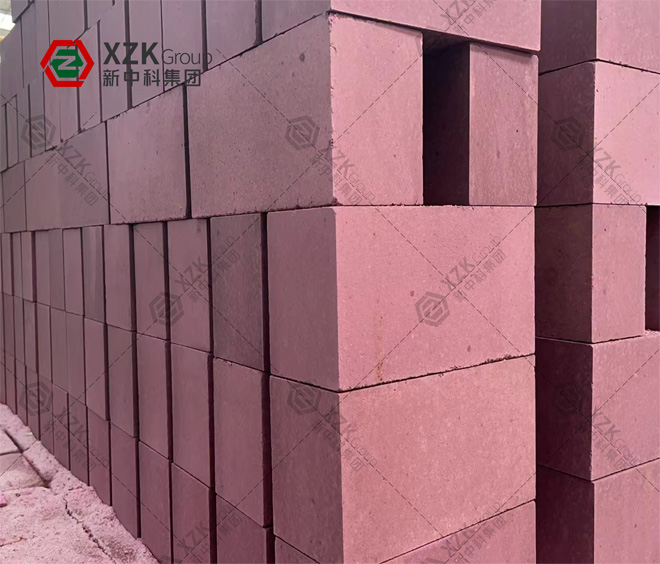
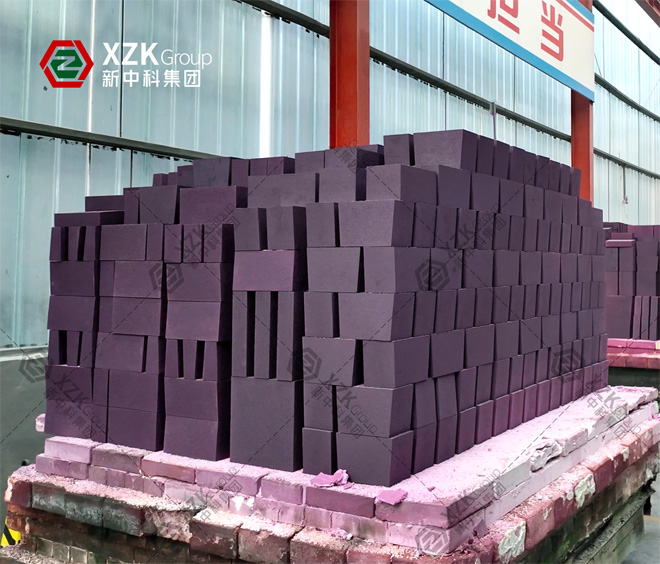
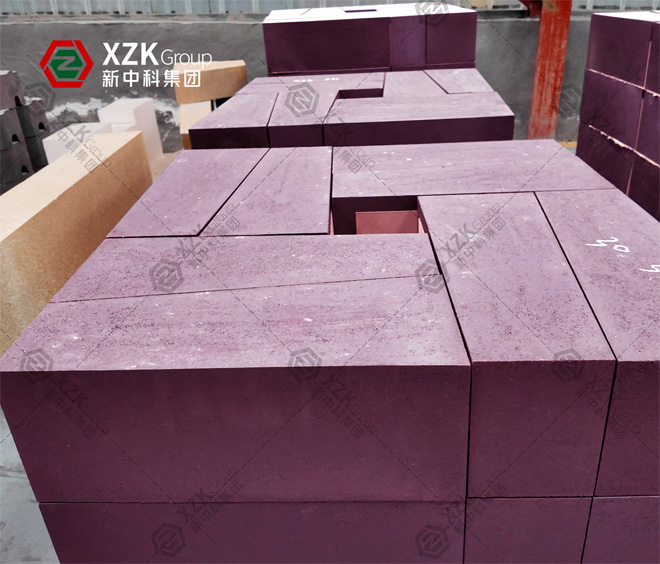
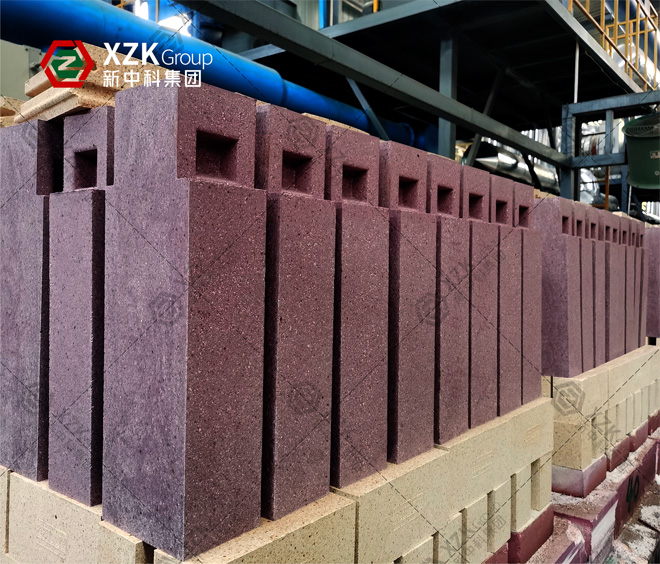
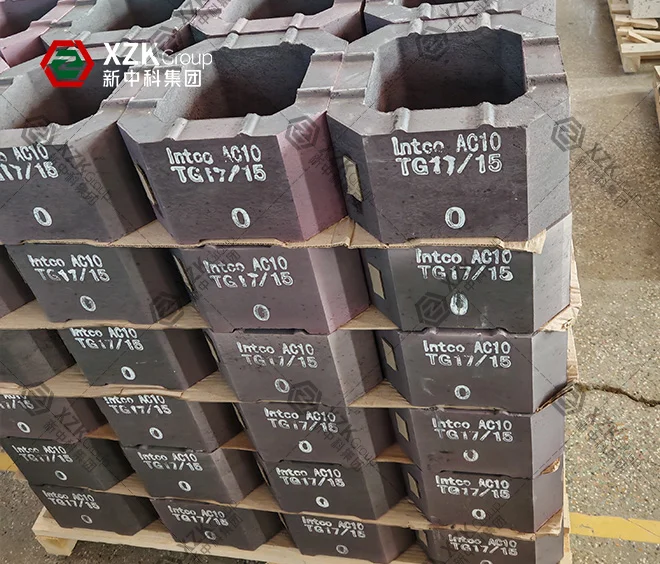
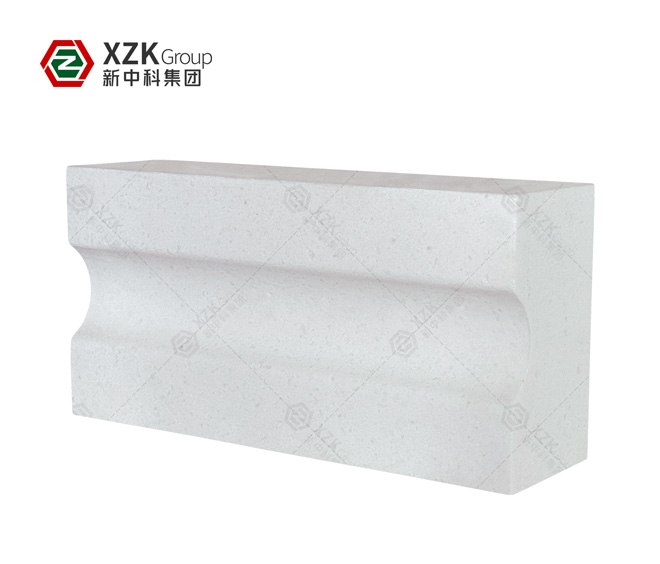
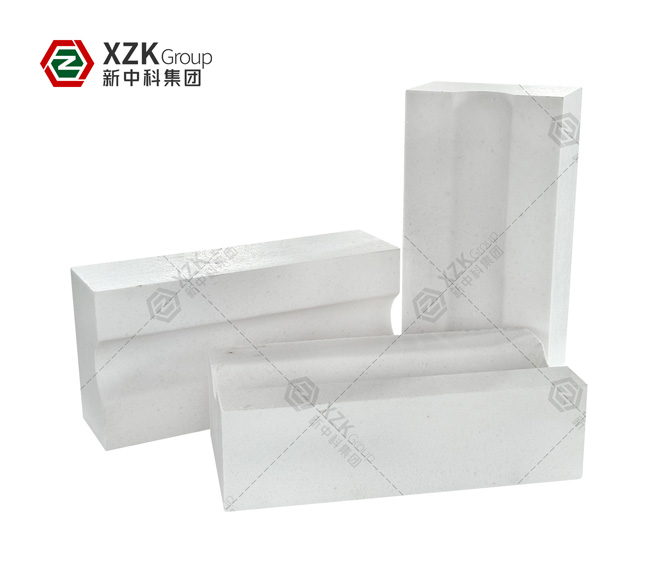
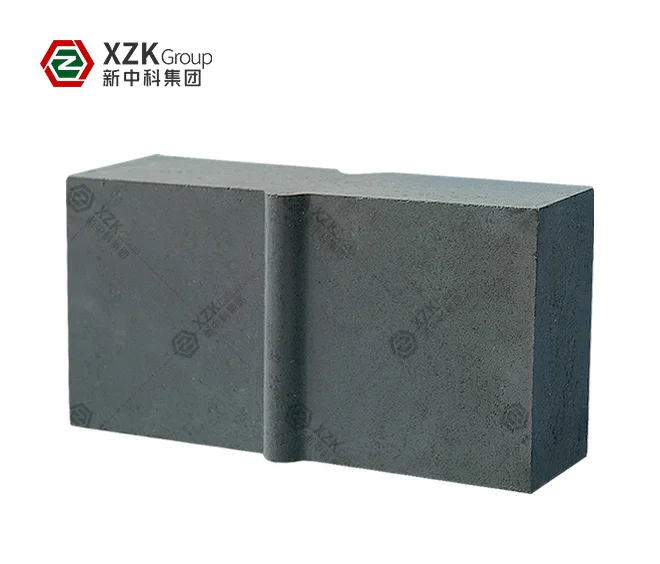
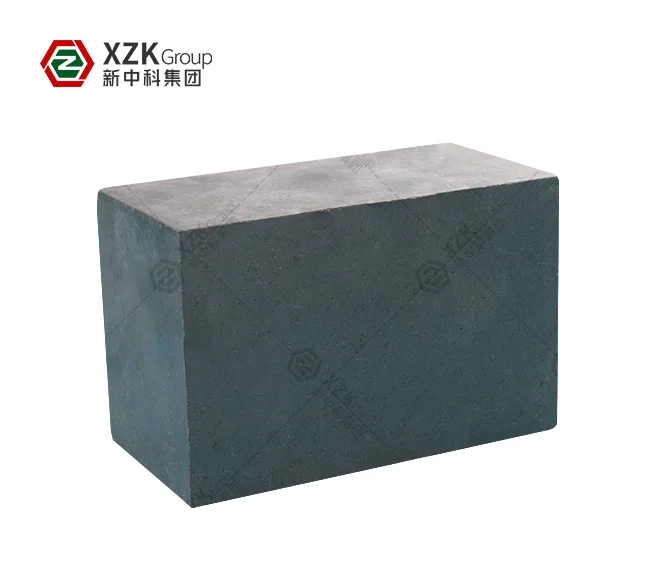
Chrome corundum bricks add chromic oxide to a corundum body, and that addition changes how the brick behaves at temperature. Chromia raises refractoriness, suppresses wetting by slag and alkali, and improves thermal shock resistance — the three mechanisms that attack regenerators, port structures and burner zones. XZK's range covers Cr2O3 from 10% to 30% in four grades.
XZK-CC10, XZK-CC12, XZK-CC15 and XZK-CC30 are produced at our Xinmi plant in Henan. The lower-chrome grades serve regenerator condensation-zone courses and port structures; the 30% grade is reserved for the most heavily attacked positions.
What Is a Chrome Corundum Brick?
Chrome corundum is a corundum-chromia solid solution. Chromic oxide and aluminium oxide form a continuous solid solution, so the chromia is not a separate phase sitting at the grain boundaries but part of the crystal lattice itself. That is why a moderate chromia addition changes the surface chemistry of the brick: molten slag and alkali no longer spread across the hot face, and the corrosion reaction at the face, which depends on continuous wetting, is slowed rather than merely resisted by bulk.
The four grades trade alumina for chromia. CC10 carries at least 10% Cr2O3 and 83% Al2O3; CC15 carries at least 14.5% Cr2O3 and 78% Al2O3; CC30 carries at least 30% Cr2O3 and 62% Al2O3, with bulk density raised to 3.40 g/cm3. Every grade reaches a cold crushing strength of at least 100 MPa and a refractoriness under load of at least 1700°C, with iron oxide held to 0.3% and apparent porosity to 17% or below.
Thermal shock is the property that decides life in a reversing furnace, and it is measured in air cooling from 950°C. The CC10, CC12 and CC15 grades reach at least 12 cycles. That rating is what allows them to survive port service, where the brick face alternates between flame and cold secondary air every 20 to 30 minutes for years. Chromia also reduces the thermal expansion mismatch between the phases in the body, so cracks are less likely to start at the hot face in the first place. The CC30 grade uses a different balance: maximum chrome for corrosion, at a lower thermal shock rating, for positions where chemical attack rather than cycling governs.
Key Properties
- Cr2O3 from 10% to 30% across XZK-CC10, CC12, CC15 and CC30, allowing chemistry to be matched to the attack at each position.
- Refractoriness under load ≥ 1700°C (0.2 MPa) in every grade, keeping the brick dimensionally stable in regenerator and port service.
- Cold crushing strength ≥ 100 MPa throughout the range, giving the structural capacity for stacked regenerator courses and port blocks.
- Thermal shock resistance ≥ 12 cycles (950°C air-cooled) for the CC10, CC12 and CC15 grades, sized to the reversal cycling of burner ports.
- Low slag and alkali wetting from chromia in solid solution in the corundum lattice, slowing the corrosion reaction at the hot face.
- Bulk density 3.25–3.40 g/cm3 with apparent porosity ≤ 17%, limiting penetration of vapour and condensate into the body.








 WhatsApp
 WeChat
 WhatsApp
 WeChat