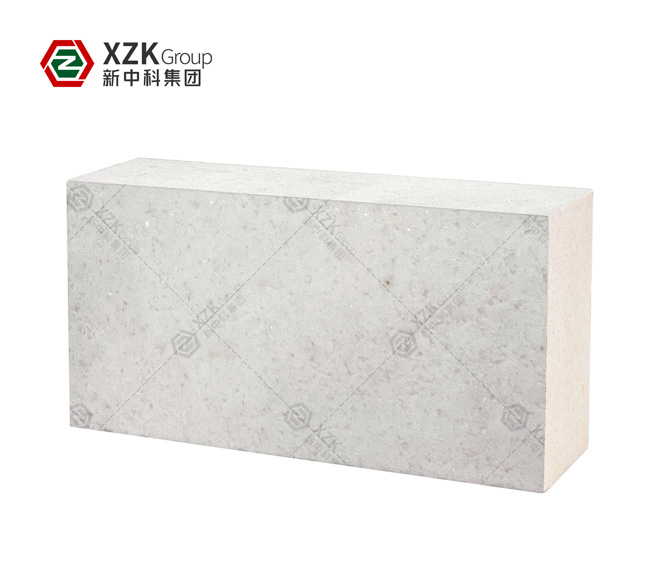
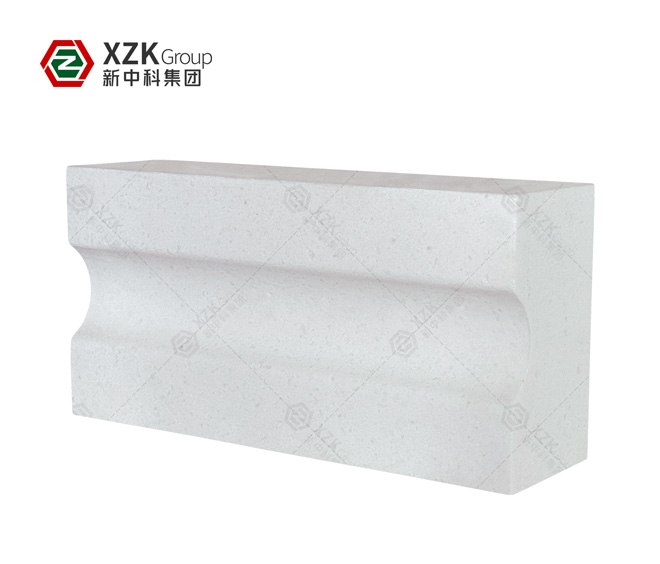
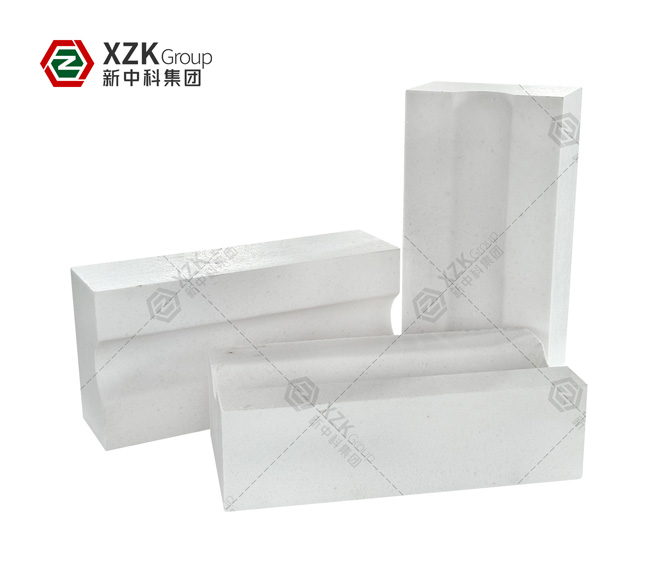
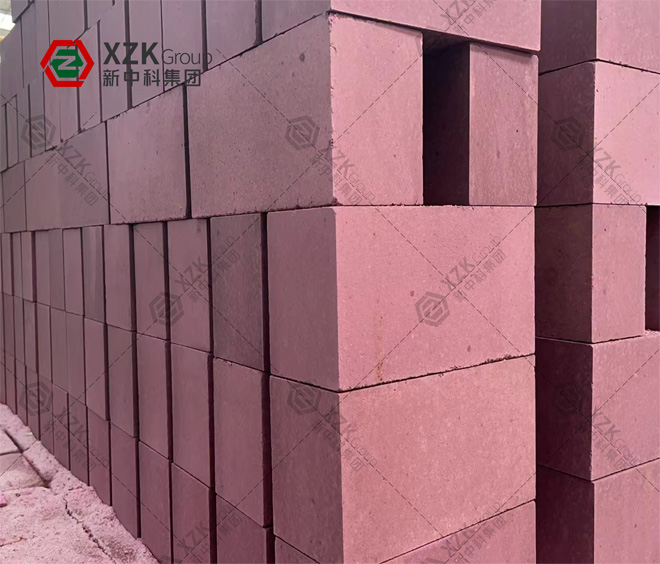
Corundum mullite bricks combine a corundum (α-Al2O3) skeleton with a mullite (3Al2O3·2SiO2) bonding matrix, giving an alumina content of 80–90% and a refractoriness under load of at least 1700°C. The two-phase structure trades a little of the purity of a straight corundum brick for markedly better thermal shock and creep behaviour.
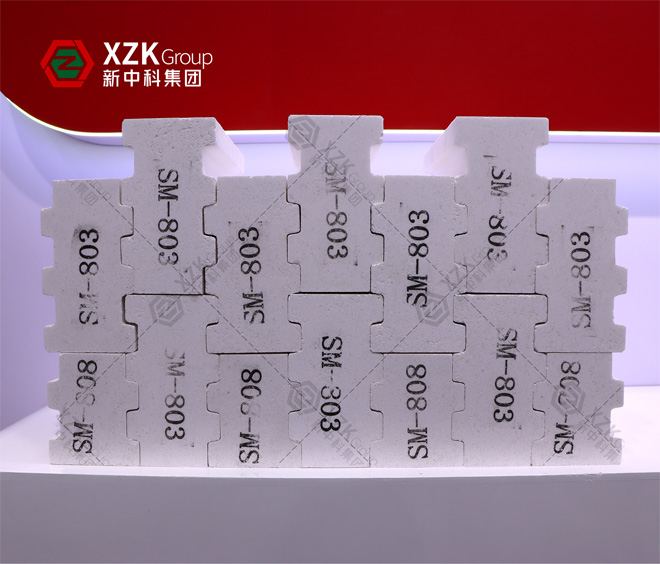
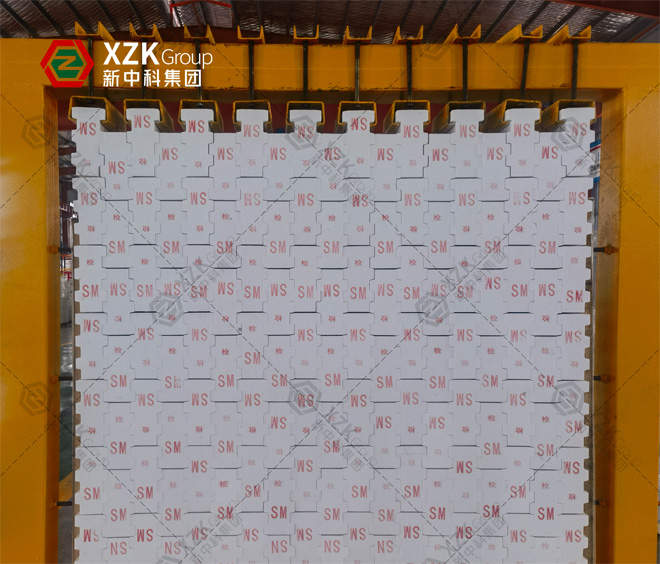
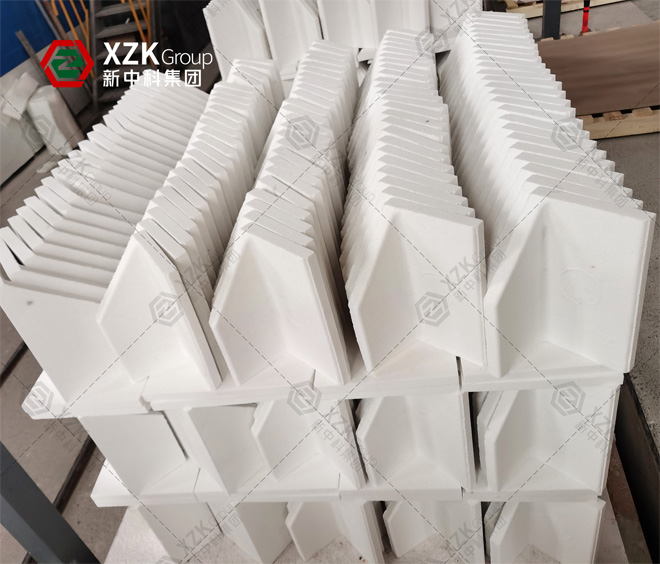
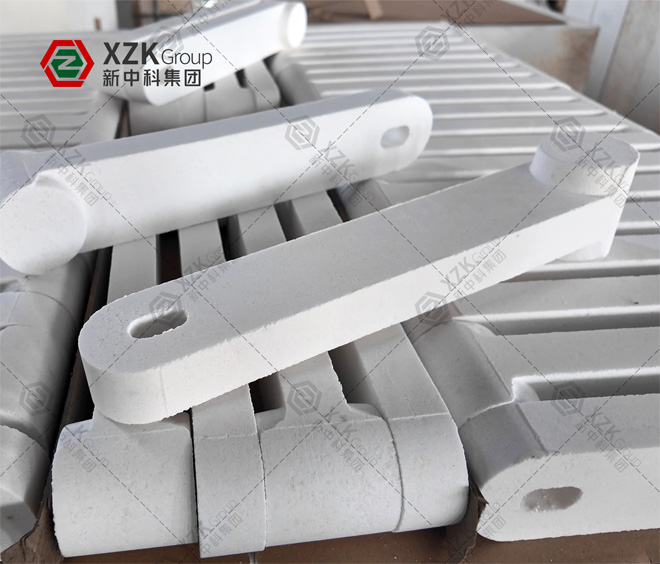
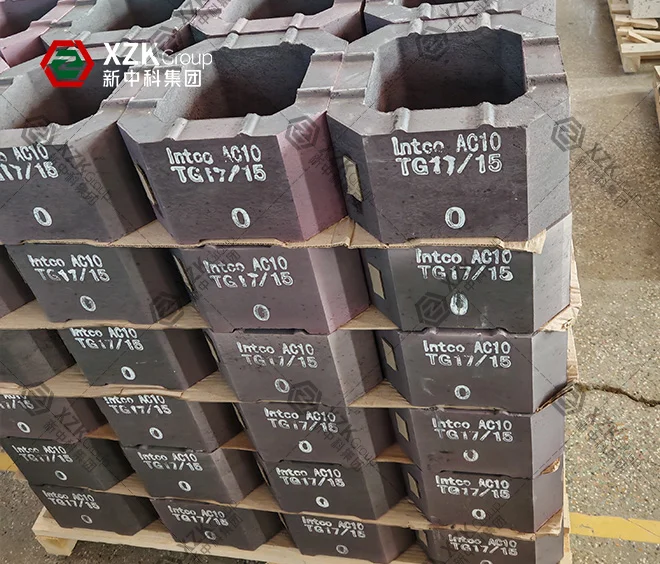
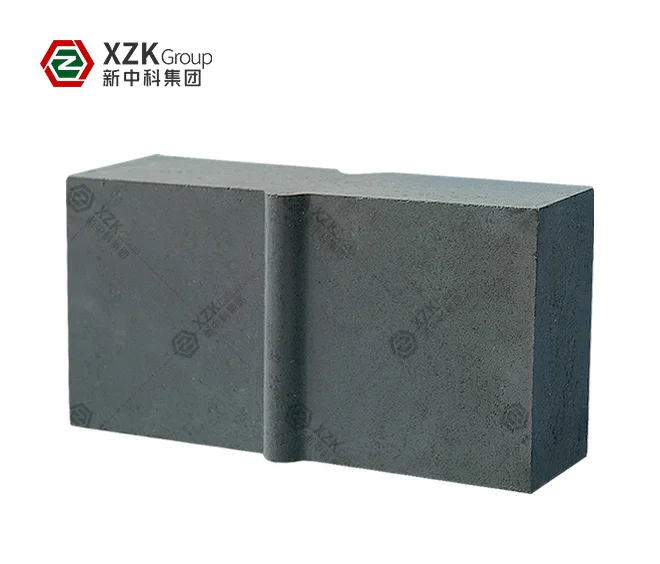
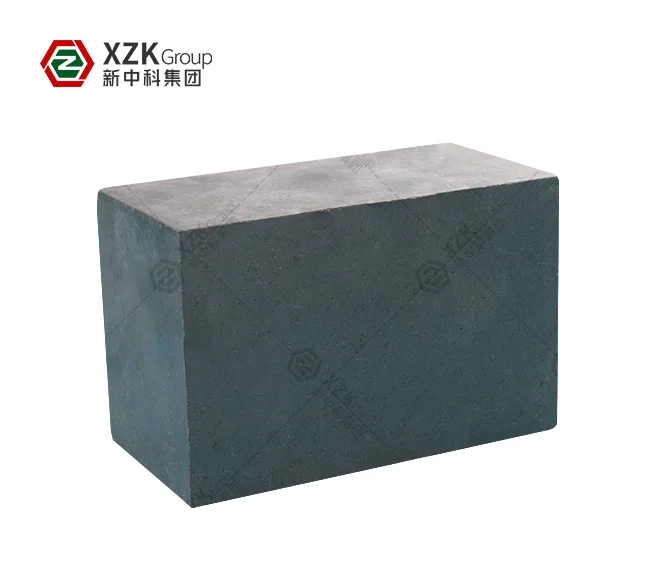
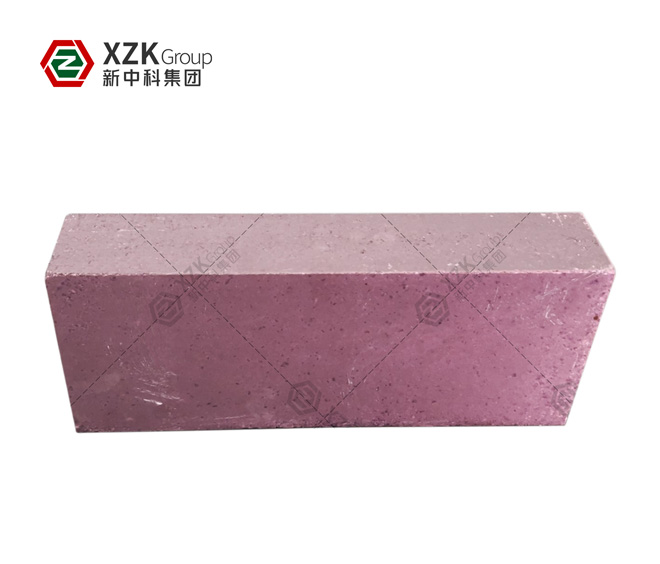
XZK Group manufactures corundum mullite bricks in grades XZK-CM80, XZK-CM85 and XZK-CM90 at our Xinmi plant in Henan. They are specified across the glass furnace superstructure — crown, breastwall, port crown, burner block, throat hanging wall and forehearth cover — in float, photovoltaic and end-fired furnaces.
What Is a Corundum Mullite Brick?
A corundum mullite brick is not a blend of two aggregates; it is a two-phase ceramic. Fused or sintered corundum grains form the load-bearing skeleton, while mullite grows between and around those grains during firing and bonds them together. Alumina content defines the grade — CM80 carries at least 80% and CM90 at least 90% — but the ratio between the phases defines the behaviour. Raising corundum increases hardness, density and refractoriness; raising the mullite fraction absorbs thermal strain, because mullite's crystal lattice accommodates expansion without cracking.
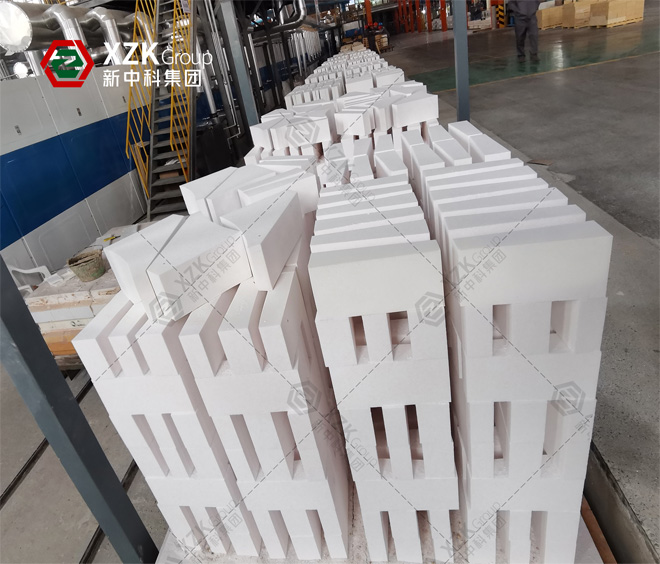
The body is pressed from graded corundum aggregate and high-purity alumina with a mullite-forming addition, on CNC presses rated 630 to 2000 tonnes. Press force sets the green density, and a controlled tunnel-kiln or shuttle-kiln schedule then completes mullitisation and sintering. Iron oxide is held between 0.15% and 0.20%, low enough that the brick neither colours the glass nor forms the low-melting phases that soften an alumina body under load.
The practical result is a brick that keeps its shape under sustained load. Creep rate at 1500°C over 5–50 h is 0.3% or lower for CM80 and CM85, and refractoriness under load is at least 1700°C in every grade. At the same time the material tolerates the cycling of port reversals and batch charging: CM85 reaches at least 15 cycles in the 1100°C water-quench test against 7 cycles for CM80.
Key Properties
- Alumina content 80–90% with corundum as the load-bearing phase and mullite as the bonding matrix, graded as XZK-CM80, CM85 and CM90.
- Refractoriness under load ≥ 1700°C (0.2 MPa) in all three grades, so the brick keeps its dimensions where fireclay and standard high-alumina bodies deform.
- Low creep — 0.3% or less at 1500°C over 5–50 h in the CM80 and CM85 grades, which is what protects hanging walls and arch structures across a long campaign.
- Thermal shock resistance of at least 7 cycles (CM80) and 15 cycles (CM85) in the 1100°C water-quench test, covering the reversal cycling of burner ports and crown positions.
- Very low iron of 0.15–0.20% Fe2O3, limiting glass contamination and the formation of low-melting phases at the hot face.
- Bulk density 2.75–3.00 g/cm3 with apparent porosity of 17–18%, producing a tight, low-permeability body against alkali vapour migration.







 WhatsApp
 WeChat
 WhatsApp
 WeChat