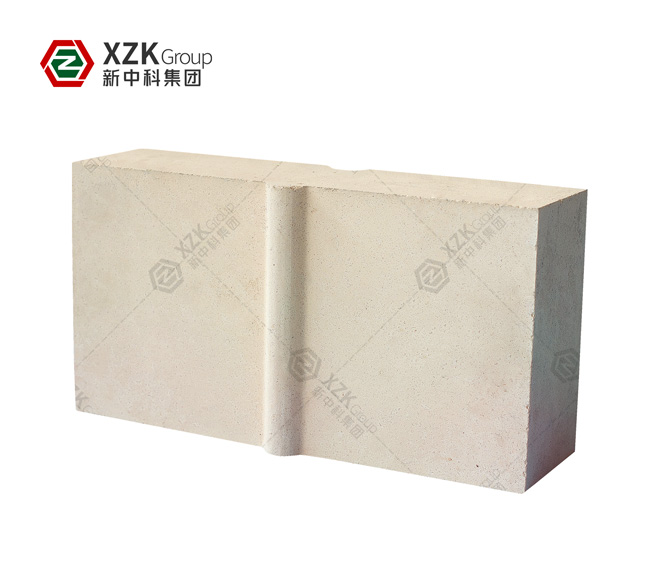
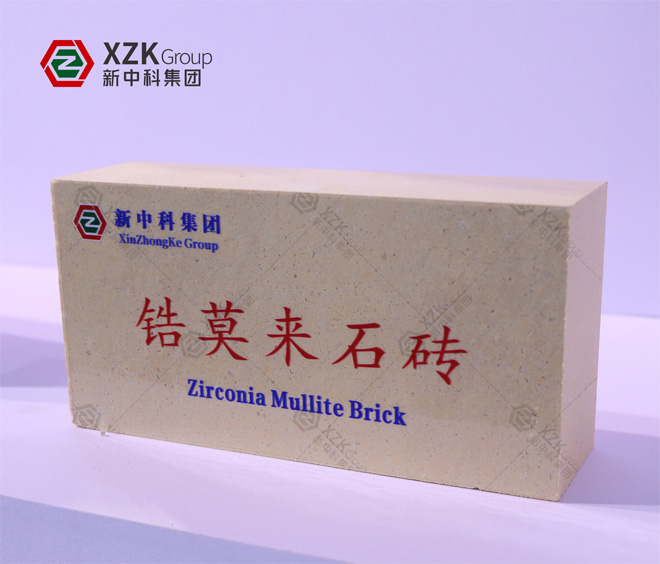
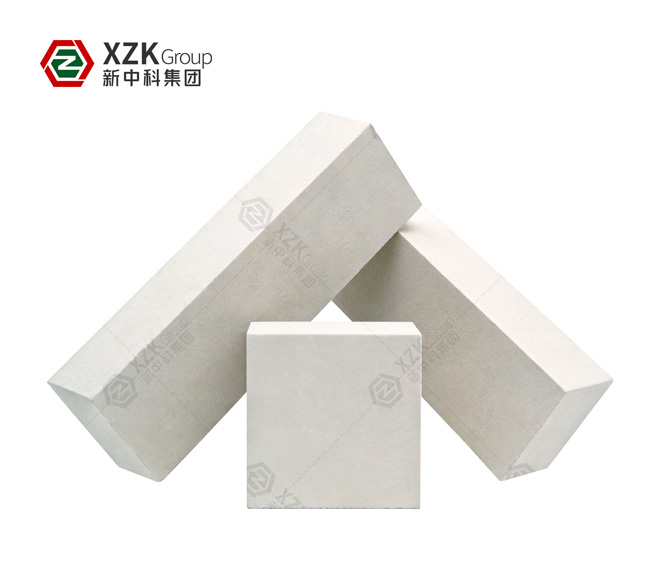
Zircon mullite bricks carry zirconia inside a mullite-corundum matrix, so one body provides the corrosion resistance of zircon and the structural stability of mullite. Zirconia content runs from 6% to 30% and alumina from 48% to 65%, giving a grade ladder that can be matched to the severity of a position instead of overspecifying every course.
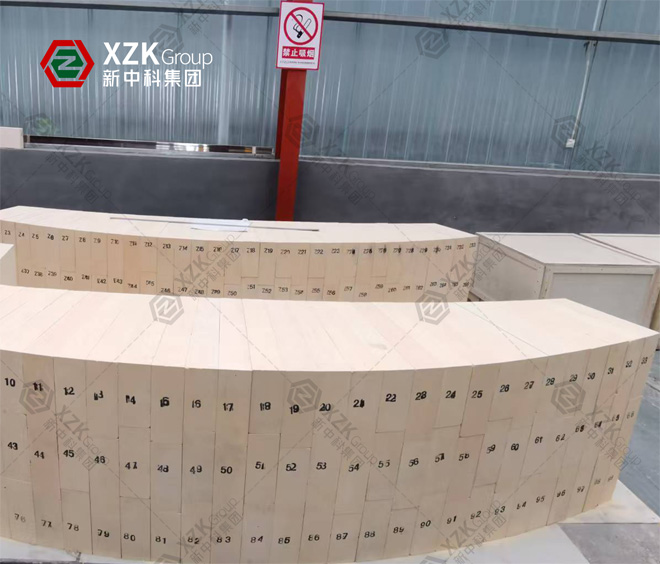
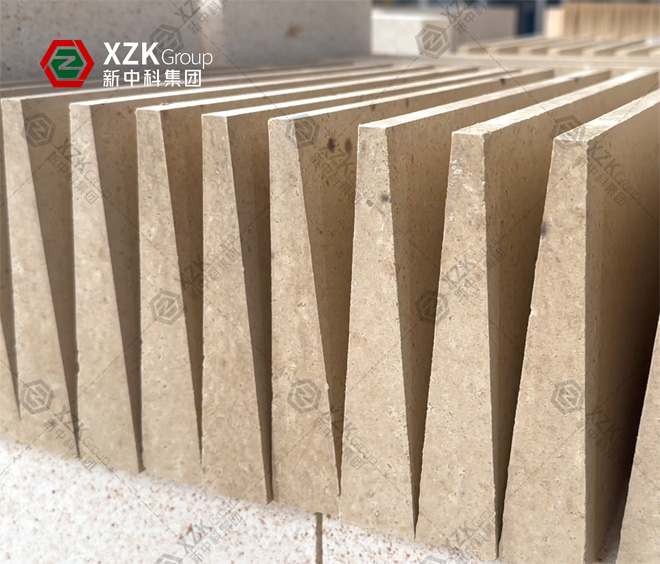
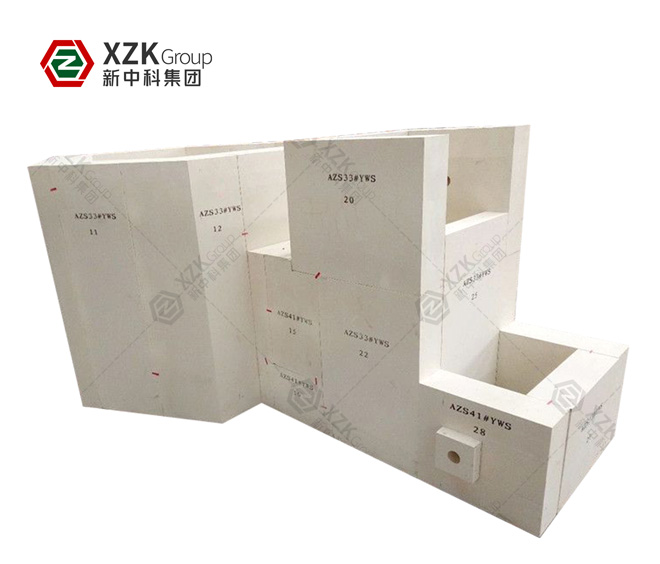
XZK Group produces zircon mullite bricks in four grades — XZK-ZM6, XZK-ZM12, XZK-ZM20 and XZK-ZM30 — at our Xinmi plant in Henan, with iron oxide held at 0.2% or below in every grade. In a glass furnace they are used at the crown, the crown corner, the doghouse, burner blocks and the forehearth.
What Is a Zircon Mullite Brick?
Zircon mullite is a composite refractory. Zirconia, introduced as zircon or zirconia, is distributed through a mullite-alumina matrix during firing. The zirconia does two jobs at once: it is chemically resistant to alkali vapour and glass melt, and its phase transformation absorbs strain energy, which blunts a crack as it tries to propagate through the brick. The mullite matrix supplies the creep resistance and volume stability that a high-zirconia body alone would not have.
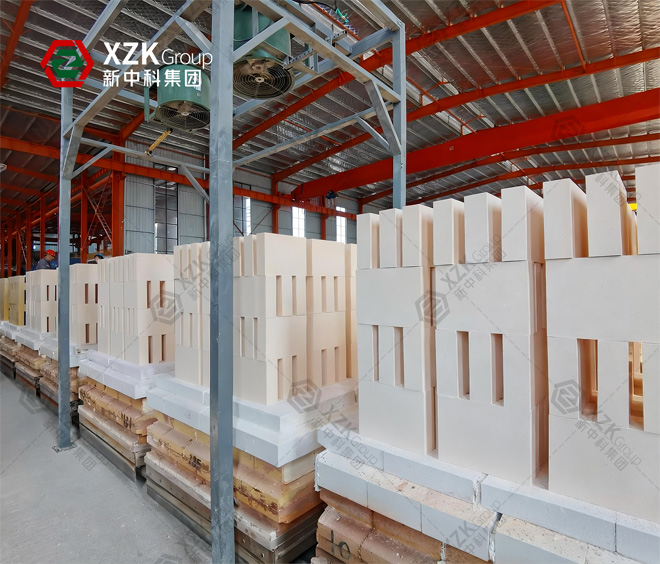
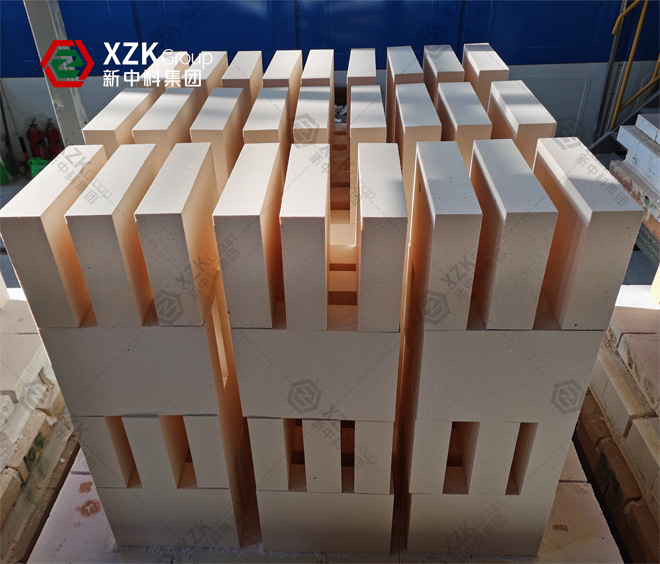
The bricks are pressed on CNC presses of 630 to 2000 tonnes and fired in fully automatic tunnel kilns, where the soak schedule controls the reaction between the zirconia and the alumina. Bulk density rises with zirconia content — from 2.8 g/cm3 at ZM6 to 3.3 g/cm3 at ZM30 — because zirconia is the denser phase. Low iron and a tightly controlled firing profile keep the mullite crystals interlocked and the apparent porosity at 17% or below.
Refractoriness under load is at least 1680°C and cold crushing strength at least 80 MPa in all four grades. That combination matters at the crown and the crown-breastwall junction, where a brick must carry structural load while resisting alkali vapour migrating upward from the melt. At the hot face the zirconia fraction determines how fast the vapour finds a reaction path; below it, the mullite matrix determines whether the course stays in place.
Key Properties
- Zirconia from 6% to 30% and alumina from 48% to 65% across XZK-ZM6, ZM12, ZM20 and ZM30, allowing the chemistry to be matched to the position.
- Refractoriness under load ≥ 1680°C (0.2 MPa) in every grade, so the brick stays dimensionally stable at the crown and crown corner.
- Cold crushing strength ≥ 80 MPa, giving the load-bearing capacity needed for arch and junction courses that carry structural stress.
- Low iron of 0.2% Fe2O3 maximum in all grades, limiting glass contamination and the formation of low-melting phases at the hot face.
- Bulk density from 2.8 to 3.3 g/cm3 with apparent porosity at 17% or below, tightening the body against alkali vapour penetration as zirconia content rises.
- Combined corrosion and thermal shock resistance from a zirconia phase dispersed through a mullite matrix, rather than a single-phase body that performs on one mechanism only.







 WhatsApp
 WeChat
 WhatsApp
 WeChat