Lightweight Silica Brick

Lightweight Silica Brick

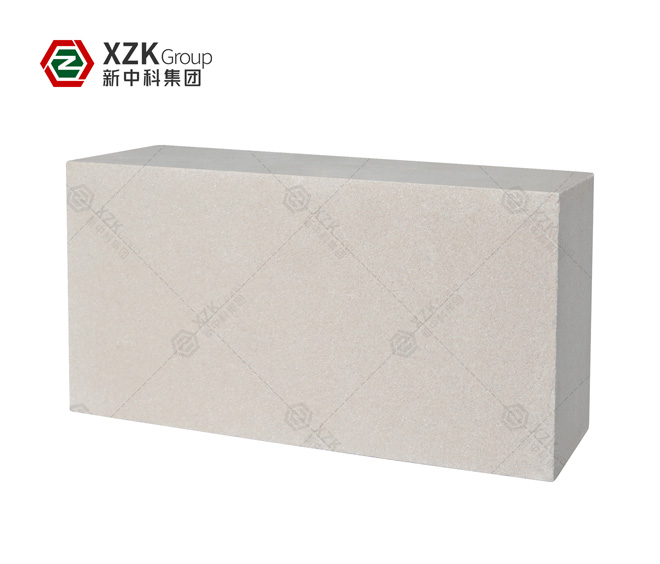
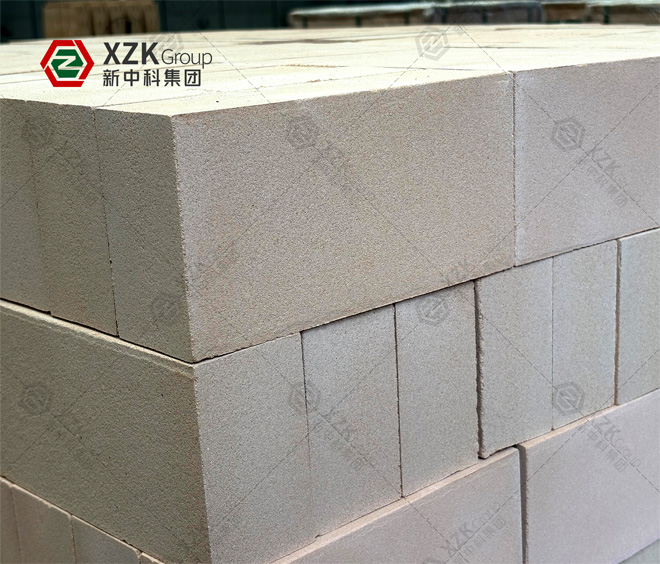
Lightweight silica bricks are insulating refractories carrying at least 91% SiO2, in which the silica is converted to tridymite and cristobalite during firing. That conversion is the whole point of the material: it gives the brick the same low and predictable thermal expansion as the dense...

SiO₂:91%
Bulk Density:0.8-1.2g/cm³
Thermal Conductivity :0.26-0.35
Lightweight Silica Brick

Lightweight Silica Brick Overview

Lightweight silica bricks are insulating refractories carrying at least 91% SiO2, in which the silica is converted to tridymite and cristobalite during firing. That conversion is the whole point of the material: it gives the brick the same low and predictable thermal expansion as the dense silica working crown it backs. XZK supplies grades LS160, LS162 and LS164 at bulk densities of 0.8, 1.0 and 1.2 g/cm3, with cold crushing strength from 2.0 to 4.0 MPa and refractoriness under load from 1600 to 1640°C.

XZK Group manufactures lightweight silica bricks at our Xinmi plant in Henan. Their principal application is the insulation layer above a silica crown in a float, photovoltaic or end-fired glass furnace, where the backing course must expand and contract in step with the working arch.

What Is a Lightweight Silica Brick?

The material is built from crushed silica rock, graded and bonded with a small addition of mineraliser, then fired to a high temperature and soaked long enough to complete the conversion of quartz into tridymite and cristobalite. That conversion happens once, in the kiln, and is deliberately finished before the brick is shipped. A brick that still contained unconverted quartz would continue to expand in service, which is unacceptable in an arch. The finished brick has a very low and well-defined residual expansion, and that predictability is what makes it usable in a crown.

The reason lightweight silica, specifically, is used to insulate a silica crown comes down to expansion matching. A silica crown grows measurably as it heats from cold to operating temperature, and the expansion is not uniform through the arch. If the insulation course above it were made of fireclay or mullite, whose expansion is different, the two layers would move by different amounts at the interface. The bond between them would be sheared, a gap would open and hot gas would channel through the crack, concentrating heat loss and eventually damaging the working brick. A lightweight silica backing expands with the crown, so the two courses act as one structure.

The silica body also retains the property that makes dense silica the standard crown material in the first place. Under sustained load at temperature, silica develops a viscous liquid phase that allows the brick to accommodate local stress rather than crack, and a lightweight silica brick carries the same chemistry, at 91% SiO2 minimum and with alumina held to 1.0% or below. Alumina is controlled because it raises the temperature at which the liquid phase forms and stiffens the body, so keeping it low protects the behaviour the crown relies on.

The trade-off is that silica insulation is not the lightest option. The three grades run from 0.8 to 1.2 g/cm3 with conductivity at the moderate end of the insulating range, and their cold crushing strength of 2.0 to 4.0 MPa is modest. The value is not maximum insulation value per kilogram; it is that the brick can be placed directly on a silica crown at all, allowing a lighter and cooler stack above it.

Key Properties

  • SiO2 ≥ 91% with Al2O3 ≤ 1.0%, keeping the body in the silica chemistry that a crown relies on and avoiding the stiffening effect of alumina.
  • Low and predictable thermal expansion after complete conversion to tridymite and cristobalite in the kiln, so the insulation course moves with the working crown rather than shearing away from it.
  • Bulk density from ≤ 0.8 to ≤ 1.2 g/cm3 — roughly half that of a dense silica crown brick — so the arch carries far less additional deadweight than a dense backing course would impose.
  • Cold crushing strength from ≥ 2.0 MPa (LS160-0.8) to ≥ 4.0 MPa (LS164-1.2), sufficient for a crown backing course and for handling during bricklaying.
  • Refractoriness under load from ≥ 1600°C (LS160) to ≥ 1640°C (LS164), giving good margin above the interface temperature that develops above a working crown.
  • No free silica reaction with alkali vapour that would open the backing course, and the same resistance to flue-gas attack that makes dense silica the standard crown material.

Technical Specifications

Technical Properties XZK-LS160-0.8 XZK-LS162-1.0 XZK-LS164-1.2
SiO₂ (%) ≥ 91 ≥ 91 ≥ 91
Al₂O₃ (%) ≤ 1.0 ≤ 1.0 ≤ 1.0
Bulk Density (g/cm³) ≤ 0.8 ≤ 1.0 ≤ 1.2
Cold Crushing Strength (MPa) ≥ 2.0 ≥ 3.0 ≥ 4.0
Refractoriness Under Load (℃) ≥ 1600 ≥ 1620 ≥ 1640

Test methods follow GB/T and ISO practice; ASTM equivalents and full certificates of analysis are issued with every shipment.

Available Grades and How to Choose

The LS grade code carries two pieces of information: the class number, which tracks the refractoriness under load of the grade, and the trailing figure, which is the target bulk density. LS160 is the 0.8 g/cm3 grade, LS162 the 1.0 g/cm3 and LS164 the 1.2 g/cm3, so a specification can be read directly from the grade name.

The three grades run in step: as density rises from 0.8 to 1.2 g/cm3, strength rises from 2.0 to 4.0 MPa and refractoriness under load from 1600 to 1640°C, but insulation value falls. Select on the temperature and load the backing course will actually see. Where the crown runs hot, use the denser grade next to the working brick; where the backing layer is one of several above the crown, the lightest grade is the better thermal choice.

  • XZK-LS160-0.8 — SiO2 ≥ 91%, Al2O3 ≤ 1.0%, bulk density ≤ 0.8 g/cm3, cold crushing strength ≥ 2.0 MPa, refractoriness under load ≥ 1600°C. The lightest grade, for the outer part of a crown insulation stack.
  • XZK-LS162-1.0 — SiO2 ≥ 91%, Al2O3 ≤ 1.0%, bulk density ≤ 1.0 g/cm3, cold crushing strength ≥ 3.0 MPa, refractoriness under load ≥ 1620°C. The general-purpose crown backing grade.
  • XZK-LS164-1.2 — SiO2 ≥ 91%, Al2O3 ≤ 1.0%, bulk density ≤ 1.2 g/cm3, cold crushing strength ≥ 4.0 MPa, refractoriness under load ≥ 1640°C. The strongest grade, placed directly on the working crown where temperature and structural demand are highest.

Industry Applications

  1. Glass Industry: Used for the insulation layers of the roofs and breast walls of melting furnaces and the temperature control of annealing furnaces.
  2. Metallurgical Industry: As linings of reheating furnaces and heat - treatment furnaces, reducing the weight and energy consumption of the furnace body.
  3. Ceramics Industry: Insulation layers of shuttle kilns and roller kilns, stabilizing the firing temperature field.

Where Lightweight Silica Bricks Are Used in a Glass Furnace

Lightweight silica brick has one dominant application in a glass furnace, and it exists because of it. The remaining positions follow from the same expansion-matching requirement.

  • Crown insulation above a silica working crown. The defining use. The insulation course is laid directly on the silica working brick, and because the two expand by the same amount, the crown behaves as a single structure through heat-up and through the furnace campaign. Advanced crown insulation designs hold heat loss below 1250 W/m2, and optimised designs below 1050 W/m2; with a lightweight silica course immediately above the working brick, a lighter mullite insulating brick can be placed above it to reach those figures without loading the springing line.
  • Breastwall insulation. Silica is also used in the upper breastwall, and where a breastwall is built in silica the backing course must match it for the same expansion reason. The lightweight grades close the wall while keeping the upper structure light.
  • Crown corner and crown springing. The junction between the crown and the breastwall carries the highest structural stress in the superstructure. A matched-expansion insulation layer here avoids the differential movement that opens joints precisely where they are most damaging.
  • Suspended wall insulation. Where a suspended wall is built in silica, a lightweight silica backing keeps the assembly thermally and dimensionally coherent and does not add a second expansion characteristic to a hanging structure.
  • Upper regenerator walls. The hot end of the regenerator operates at temperatures where silica remains stable; a lightweight silica course insulates the wall from behind without the risk of an incompatible backing material.
  • Port and burner block surroundings. Around the port neck and burner blocks, a matched silica backing supports the working block and keeps the structure around the flame path consistent.

Manufacturing and Quality Control

Lightweight silica bricks are produced from crushed silica rock with a controlled grading and a small mineraliser addition, formed on CNC presses rated 630 to 2000 tonnes and fired in four 108-metre fully automatic tunnel kilns and five ultra-high-temperature shuttle kilns. The firing schedule is the critical control: the brick must be held long enough to complete the conversion of quartz to tridymite and cristobalite, and cooled slowly enough that the volume change of that conversion does not crack the body. Each grade is fired to its own density-specific schedule.

Every batch is tested for SiO2 and Al2O3 content, bulk density, cold crushing strength and refractoriness under load, and residual expansion is verified so that the brick will not continue to grow in the crown. A certificate of analysis is issued with each shipment. XZK Group holds ISO 9001, ISO 14001, ISO 45001 and ISO 50001 certification and operates the Henan Provincial Engineering Technology Research Center for Sintered Refractories for Glass Furnaces.

Related Refractory Products

Lightweight silica bricks are supplied as part of a crown package, normally directly above a dense silica crown and below a course of mullite insulating bricks, with clay insulating bricks and high alumina insulating bricks used elsewhere in the same structure. Where a silica crown cannot be used, fused silica bricks and alumina bubble bricks cover neighbouring positions. The dense superstructure courses include sillimanite bricks and mullite bricks. See the insulating bricks range or browse all refractory products.

Proven Global Projects

About XZK Group

Strengths
Innovation
R&D Team
Facilities
Honors
Product Portfolio
Specializing in premium zircon, corundum, sintered AZS, and monolithics. With a $70M+ annual output, we deliver durable linings for global high-temp industries.
Capacity
✔ 4 automated microcomputer batching systems.
✔ 4 ultra-high-temp tunnel kilns & 5 shuttle kilns.
✔ 20+ CNC hydraulic presses (630-1500T).
✔ Digitalized workshops with 100,000T annual capacity.
Core Strengths
Core Strengths
Core Strengths
Core Strengths
Core Strengths
💡
93 patents, featuring the "Tri-Resist Brick" for glass kilns. Field-proven for superior corrosion and thermal shock resistance.
📜
Co-authored multiple National Standards for Andalusite, Chrome-Corundum, and Zircon bricks with CBMA.
🤝
Strategic partner to Fortune 500 leaders: China Baowu, CNBM, CSG, Xinyi, and Kibing Glass.
Tech & Innovation
Tech & Innovation
Tech & Innovation
Expert R&D Team
Led by Prof. Shi Gan, our 40+ engineers leverage advanced testing centers to drive innovation in green refractory technologies.
Professor Shi Gan
Prof. Shi Gan
Chief Scientist
Senior Engineer & National Expert (State Council Allowance).
Key drafter of 5+ national refractory standards.
Inventor of "Tri-Resist Brick", maximizing glass furnace lifespan.
R&D Center
Laboratory Equipment
Zhongke Refractories
Insulating Materials Base: Alumina Bubble, Mullite, High-Alumina & Fireclay bricks.
Zhongke New Materials
Special Refractories Base: Chrome-Corundum, Tri-Resist, and Low-Porosity bricks.
Henruida New Materials
Premium Refractories Base: Zircon, Corundum, Sintered AZS, and monolithics.
Zhengzhou Zhongke Refractories Co., Ltd. Zhengzhou Zhongke New Materials Co., Ltd. Zhengzhou Henruida New Materials Co., Ltd.
Certifications & Honors

Certified by ISO 9001, 14001, 45001, 50001 Management Systems.

Honored as:

  • National High-Tech Enterprise
  • Specialized & Innovative SME
  • Provincial Green Factory
  • Grade A Environmental Enterprise
Certifications & Honors
Beginning with professional consultation to accurately identify and address specific requirements
One-to-one Service
We offer one-on-one dedicated sales and technical team services to perfectly solve any refractory material problems you encounter
Professional Solution
The company has over 30 technical R&D personnel and can provide professional solutions based on the on-site conditions of customers
Quality Management System
We have a strict quality management system to ensure the stability of the quality of each batch of products.
Responsible After-sales Service
Our dedicated technical team will visit customers regularly and provide free lifetime after-sales service
leave a message for refractory
Contact Us
Phone/WhatsApp/Wechat: 0086 19059612888
Add: Micun & Laiji Refractory Industry Zone, Xinmi City, Henan Province, China
WhatsApp of XZK refractory WhatsApp
WeChat of XZK refractory WeChat

Leave a message
Please submit your inquiry using the form provided below. We will offer you a solution and quotation within 24 hours.

    CONTACT US
    To ensure we provide you with the best possible
    solution, please share:
    1. Type of refractory product you are interested in.
    2. Specific requirements (e.g., dimensions, quantity, using temp).
    3. Your industry or application area – this helps us
    tailor the ideal solution for you.
    Tel/WhatsApp/Wechat:
    0086 19059612888
    WhatsApp
    WeChat
    LEAVE A MESSAGE
    Please feel free to submit your inquiry using the form provided below, and we will provide you with a quote within 24 hours.

      WhatsApp

      WhatsApp ID: +86 190 5961 2888

      Email
      WeChat

      WeChat ID: +86 190 5961 2888

      Telephone