Alumina Bubble Brick

Alumina Bubble Brick

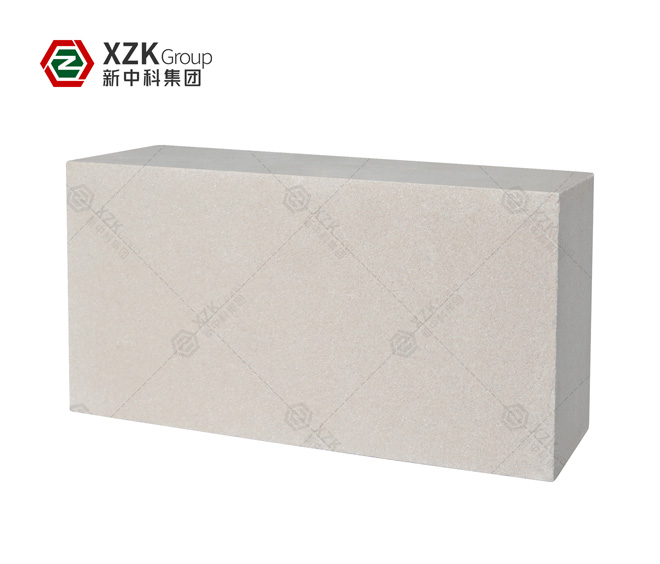
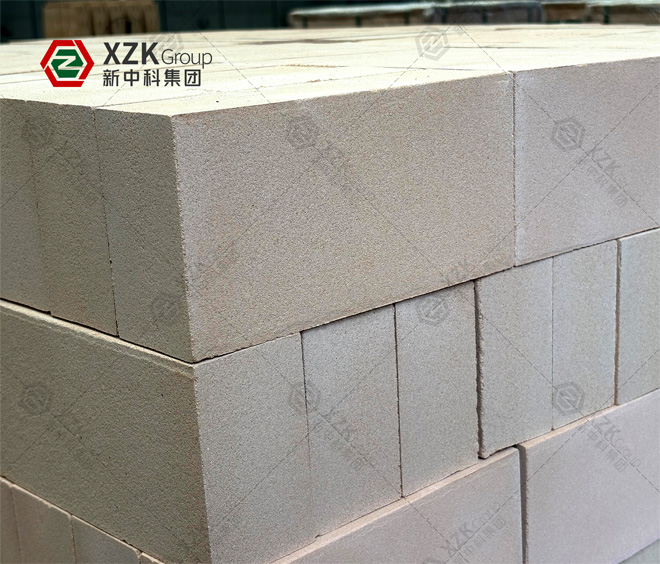
Alumina bubble bricks are manufactured from hollow spheres of fused alumina, graded and bonded into a brick and fired. Because the voids are sealed spheres of alumina rather than voids left in a clay matrix, the material reaches a combination that ordinary insulation cannot: a bulk density of...

Al₂O₃:90-99%
Bulk Density:1.35-1.70g/cm³
Cold Crushing Strength:8-20MPa
Refractoriness:1800℃
Alumina Bubble Brick

Alumina Bubble Brick Overview

Alumina bubble bricks are manufactured from hollow spheres of fused alumina, graded and bonded into a brick and fired. Because the voids are sealed spheres of alumina rather than voids left in a clay matrix, the material reaches a combination that ordinary insulation cannot: a bulk density of 1.35 to 1.70 g/cm3 together with refractoriness under load of 1650 to 1700°C at 0.1 MPa. That is the point of the material — low density and high refractoriness in the same brick.

XZK Group produces alumina bubble bricks in grades XZK-AB90, AB93, AB95 and AB99 at our Xinmi plant in Henan. They are used where an insulation layer is itself exposed to high temperature, as backing above a silica or mullite crown, in the hotter parts of the regenerator, behind suspended walls, around the doghouse and in the forehearth.

What Is an Alumina Bubble Brick?

The aggregate is the defining feature. Alumina is melted and dispersed so that it solidifies into hollow, roughly spherical shells, and those spheres become the aggregate of the brick. Each sphere has a dense alumina wall and a sealed gas-filled interior. Alumina content of the finished brick runs from 90% in AB90 to 99% in AB99, and it is carried almost entirely by the sphere material itself rather than by a lower-grade bond, which is why these bricks keep their refractoriness where a fireclay insulator would soften.

Manufacture begins with the spheres, which are graded by size before batching. Sphere size distribution controls the packing of the body and therefore its density: a well-graded charge packs more efficiently and gives a denser, stronger brick, while a higher proportion of large spheres gives a lighter brick that insulates better. The graded spheres are combined with a high-purity alumina bond, formed, and fired so that the bond sinters to the sphere walls without filling the spaces between them.

The performance mechanism is the closed, spherical pore. In a porous brick with open channels, hot gas can move through the body and carry heat by convection as well as conduction. A closed sphere traps still gas inside an alumina shell, so the only heat path through the material is conduction along the sphere walls and across the contact points between them. At the same time, the alumina wall resists the temperature that would soften the aluminosilicate bond of a conventional insulating firebrick.

The trade-off is mechanical. Cold crushing strength is 8 MPa in AB90 and 20 MPa in AB99, far below a dense corundum brick, so an alumina bubble brick is still a backup material and is not specified as a hot face in direct melt contact. What it does is extend the working temperature of the insulation course, allowing a lighter and cooler outer stack behind it while it absorbs the temperature that a standard insulating firebrick could not.

Key Properties

  • Alumina content from 90% (AB90) to 99% (AB99), carried by the fused hollow spheres themselves, so refractoriness is not diluted by a low-grade bond.
  • Low bulk density of ≤ 1.35 to ≤ 1.70 g/cm3 — roughly half the weight of a dense corundum brick and a third of a dense zircon brick — which keeps structural load off the crown and shell.
  • Refractoriness under load from ≥ 1650°C (AB90) to ≥ 1700°C (AB95 and AB99) at 0.1 MPa, the property that separates this material from every aluminosilicate insulating brick.
  • Cold crushing strength from ≥ 8 MPa (AB90) to ≥ 20 MPa (AB99), adequate for a backing course and for handling, but not a substitute for a dense structural brick.
  • Very low iron oxide, from ≤ 0.5% in AB90 to ≤ 0.1% in AB99, important where the insulation sits above a glass bath and any volatile species can migrate downward into the melt.
  • Closed spherical porosity, which suppresses convection through the body and slows the penetration of alkali vapour that would attack an open-pored insulator.

Technical Specifications

Technical Properties XZK-AB90 XZK-AB93 XZK-AB95 XZK-AB99
Al₂O₃ (%) ≥ 90 ≥ 93 ≥ 95 ≥ 99
Fe₂O₃ (%) ≤ 0.5 ≤ 0.4 ≤ 0.2 ≤ 0.1
Bulk Density (g/cm³) ≤ 1.35 ≤ 1.40 ≤ 1.60 ≤ 1.70
Cold Crushing Strength (MPa) ≥ 8 ≥ 12 ≥ 18 ≥ 20
Refractoriness Under Load (0.1MPa, ℃) ≥ 1650 ≥ 1680 ≥ 1700 ≥ 1700

Test methods follow GB/T and ISO practice; ASTM equivalents and full certificates of analysis are issued with every shipment.

Available Grades and How to Choose

The four grades form a ladder in which purity, density and strength rise together while refractoriness also rises. Choosing a grade is therefore a question of how hot the insulation course will actually run and how much mechanical load it will see.

Purity matters beyond refractoriness. In AB99, iron oxide is held to 0.1%, which limits the volatile species that can migrate from the insulation layer toward the glass bath. Where the position is thermally demanding but remote from glass contact, AB90 or AB93 delivers the same structural function at lower cost.

  • XZK-AB90 — Al2O3 ≥ 90%, Fe2O3 ≤ 0.5%, bulk density ≤ 1.35 g/cm3, cold crushing strength ≥ 8 MPa, refractoriness under load ≥ 1650°C. The lightest and most economical grade, for large backing areas at moderate severity.
  • XZK-AB93 — Al2O3 ≥ 93%, Fe2O3 ≤ 0.4%, bulk density ≤ 1.40 g/cm3, cold crushing strength ≥ 12 MPa, refractoriness under load ≥ 1680°C. A higher-strength grade for crown backs and regenerator walls.
  • XZK-AB95 — Al2O3 ≥ 95%, Fe2O3 ≤ 0.2%, bulk density ≤ 1.60 g/cm3, cold crushing strength ≥ 18 MPa, refractoriness under load ≥ 1700°C. For the hottest backing positions where contamination control also matters.
  • XZK-AB99 — Al2O3 ≥ 99%, Fe2O3 ≤ 0.1%, bulk density ≤ 1.70 g/cm3, cold crushing strength ≥ 20 MPa, refractoriness under load ≥ 1700°C. The highest-purity grade, for positions where the insulation sits close to a glass contact zone.

Industry Applications

  1. Glass Industry:‌ Used in glass kiln regenerators (heat recovery chambers) and high-temperature laboratory furnace linings.
  2. Ceramic Industry:‌ Applied to kiln roofs and walls for firing household and technical ceramics. Also used as high-temperature insulation in roller kilns.
  3. Metallurgical Industry:‌ Lining for aluminum electrolytic cells. High-temperature insulation in steel industry reheating furnaces and soaking pits. Lining for non-ferrous metal smelting furnaces.
  4. Chemical Industry:‌ Used in reactor linings for petrochemical cracking and fertilizer reforming. Also serves as refractory and insulating layers in high-temperature reactors.
  5. Aerospace & Other Fields:‌ Used as high-temperature insulating components and structures.

Where Alumina Bubble Bricks Are Used in a Glass Furnace

Alumina bubble brick is chosen where an insulation course must survive a temperature that would destroy a conventional insulating firebrick. In a glass furnace that means the positions closest to the hot structure.

  • Crown insulation behind the working arch. On a high-temperature crown, the course immediately above the silica or mullite working brick runs hotter than a standard insulating firebrick can tolerate. Alumina bubble brick bridges that gap: it takes the temperature at the interface and allows a lighter, cooler stack of mullite insulating brick above it, keeping the overall crown deadweight down while the crown loss stays low.
  • Regenerator hot zone walls and backing. The upper regenerator sees alkali vapour and high-velocity dust together with thermal cycling at every reversal. A closed-sphere alumina body resists the vapour better than an open-pored insulator and holds its shape across the cycle.
  • Suspended wall backing and anchors. The anchor zone of a suspended wall sits close to the hot face and is difficult to cool. A low-mass, high-refractoriness backing reduces the temperature the steelwork sees without adding much weight for the anchors to carry.
  • Doghouse and charging end. Around the doghouse the lining faces batch dust and repeated charging cycles; the alumina bubble course supports the working brick and damps the thermal gradient through the wall.
  • Forehearth and feeder covers. Where a forehearth or a special-glass channel runs hot, alumina bubble brick backs the cover or sidewall block, keeping the outer casing cool without contaminating the glass.
  • High-temperature insulation under hot-bottom structures, where the underside of the paving runs too hot for an aluminosilicate insulator and a stronger, denser block is not wanted for structural reasons.

Manufacturing and Quality Control

Alumina bubble bricks start with fused alumina hollow spheres, which are graded by size before batching so that the packing of the body, and therefore its density and strength, is set by the charge rather than by press pressure alone. The graded spheres are mixed with a high-purity alumina bond and formed on the same CNC press line used for our dense refractories, then fired in ultra-high-temperature shuttle kilns and tunnel kilns so that the bond sinters to the sphere walls without collapsing the spheres or filling the spaces between them.

Every batch is checked for alumina and iron oxide content, bulk density, cold crushing strength and refractoriness under load, and ships with a certificate of analysis. Sphere grading records are retained so that a repeat order reproduces the same density. XZK Group holds ISO 9001, ISO 14001, ISO 45001 and ISO 50001 certification and operates the Henan Provincial Engineering Technology Research Center for Sintered Refractories for Glass Furnaces.

Related Refractory Products

Alumina bubble bricks work as the hot side of an insulation stack, with the lighter mullite insulating bricks and high alumina insulating bricks behind them and clay insulating bricks outermost. Where the duty is monolithic rather than brick, lightweight mullite castable and insulating castable cover the same function. The dense courses they back include corundum bricks and sillimanite bricks. See the insulating bricks range or browse all refractory products.

Proven Global Projects

About XZK Group

Strengths
Innovation
R&D Team
Facilities
Honors
Product Portfolio
Specializing in premium zircon, corundum, sintered AZS, and monolithics. With a $70M+ annual output, we deliver durable linings for global high-temp industries.
Capacity
✔ 4 automated microcomputer batching systems.
✔ 4 ultra-high-temp tunnel kilns & 5 shuttle kilns.
✔ 20+ CNC hydraulic presses (630-1500T).
✔ Digitalized workshops with 100,000T annual capacity.
Core Strengths
Core Strengths
Core Strengths
Core Strengths
Core Strengths
💡
93 patents, featuring the "Tri-Resist Brick" for glass kilns. Field-proven for superior corrosion and thermal shock resistance.
📜
Co-authored multiple National Standards for Andalusite, Chrome-Corundum, and Zircon bricks with CBMA.
🤝
Strategic partner to Fortune 500 leaders: China Baowu, CNBM, CSG, Xinyi, and Kibing Glass.
Tech & Innovation
Tech & Innovation
Tech & Innovation
Expert R&D Team
Led by Prof. Shi Gan, our 40+ engineers leverage advanced testing centers to drive innovation in green refractory technologies.
Professor Shi Gan
Prof. Shi Gan
Chief Scientist
Senior Engineer & National Expert (State Council Allowance).
Key drafter of 5+ national refractory standards.
Inventor of "Tri-Resist Brick", maximizing glass furnace lifespan.
R&D Center
Laboratory Equipment
Zhongke Refractories
Insulating Materials Base: Alumina Bubble, Mullite, High-Alumina & Fireclay bricks.
Zhongke New Materials
Special Refractories Base: Chrome-Corundum, Tri-Resist, and Low-Porosity bricks.
Henruida New Materials
Premium Refractories Base: Zircon, Corundum, Sintered AZS, and monolithics.
Zhengzhou Zhongke Refractories Co., Ltd. Zhengzhou Zhongke New Materials Co., Ltd. Zhengzhou Henruida New Materials Co., Ltd.
Certifications & Honors

Certified by ISO 9001, 14001, 45001, 50001 Management Systems.

Honored as:

  • National High-Tech Enterprise
  • Specialized & Innovative SME
  • Provincial Green Factory
  • Grade A Environmental Enterprise
Certifications & Honors
Beginning with professional consultation to accurately identify and address specific requirements
One-to-one Service
We offer one-on-one dedicated sales and technical team services to perfectly solve any refractory material problems you encounter
Professional Solution
The company has over 30 technical R&D personnel and can provide professional solutions based on the on-site conditions of customers
Quality Management System
We have a strict quality management system to ensure the stability of the quality of each batch of products.
Responsible After-sales Service
Our dedicated technical team will visit customers regularly and provide free lifetime after-sales service
leave a message for refractory
Contact Us
Phone/WhatsApp/Wechat: 0086 19059612888
Add: Micun & Laiji Refractory Industry Zone, Xinmi City, Henan Province, China
WhatsApp of XZK refractory WhatsApp

WeChat of XZK refractory WeChat

Leave a message
Please submit your inquiry using the form provided below. We will offer you a solution and quotation within 24 hours.

    CONTACT US
    To ensure we provide you with the best possible
    solution, please share:
    1. Type of refractory product you are interested in.
    2. Specific requirements (e.g., dimensions, quantity, using temp).
    3. Your industry or application area – this helps us
    tailor the ideal solution for you.
    Tel/WhatsApp/Wechat:
    0086 19059612888
    WhatsApp
    WeChat
    LEAVE A MESSAGE
    Please feel free to submit your inquiry using the form provided below, and we will provide you with a quote within 24 hours.

      WhatsApp

      WhatsApp ID: +86 190 5961 2888

      Email
      WeChat

      WeChat ID: +86 190 5961 2888

      Telephone