

Mullite Bricks
Dimensionally stable under sustained load — from 50% to 90% alumina, with corundum mullite, zircon mullite and 3L variants for every regenerator zone.
Mullite bricks are the structural refractories of a glass furnace. Where other materials handle direct corrosion, mullite carries load: it is the base of the regenerator checkerwork, the rider arch beneath it, and the cover blocks above the forehearth. Its defining property is that it does not deform under sustained load at temperature.
XZK Group manufactures mullite-based refractories from our Xinmi plant in Henan, covering sintered mullite bricks, corundum mullite bricks, zircon mullite bricks, 3L (three-low) mullite and silica mullite grades. Together they cover the full range of regenerator and superstructure duty in float, container and fibre glass furnaces.
What Are Mullite Bricks?
Mullite (3Al2O3·2SiO2) is the stable aluminosilicate phase that forms when alumina-silica refractories are fired at high temperature. Its crystal habit — interlocking needle-like grains — is what gives mullite bricks their resistance to creep, the slow plastic deformation that ends the life of a structural lining.
A brick that sags by a few millimetres a year closes joints and distorts the structure above it. In a regenerator carrying hundreds of tonnes of checkerwork, that deformation accumulates until courses shift or the lining fails. Mullite resists it far better than fireclay or conventional high alumina bodies because its crystal network locks the structure in place.
Why mullite, and not just high alumina?
High alumina bricks also contain mullite, but as a minor phase in a corundum-dominated body. Increasing the mullite fraction trades some refractoriness for markedly better thermal shock resistance and volume stability — which is exactly the balance a regenerator needs. The result is a brick that survives repeated reversals without spalling, and holds its dimensions over a multi-year campaign.
Types and Grades of Mullite Bricks
Six families sit under the mullite heading. They differ in alumina content and in what is added to the matrix — corundum, zirconia or silicon carbide — and therefore in which duty each is designed for.

Sintered mullite
Mullite Brick
XZK-ML70-A · ML70-B · ML65-C
The general-purpose mullite grade for regenerator checkerwork, rider arches and structural courses. Available machine pressed in two performance levels and as a cast large block for oversized shapes.
Al2O3 ≥ 65–70% · RUL ≥ 1600–1700°C · CCS ≥ 75–80 MPa

Three-low grade
3L-Mullite Brick
XZK-3L-ML50
A "three-low" composition engineered for low apparent porosity, low creep rate and low permanent linear change. Specified where dimensional predictability matters more than peak refractoriness.
Al2O3 ≥ 50% · Porosity ≤ 15% · Creep (1400°C) ≤ 0.5%
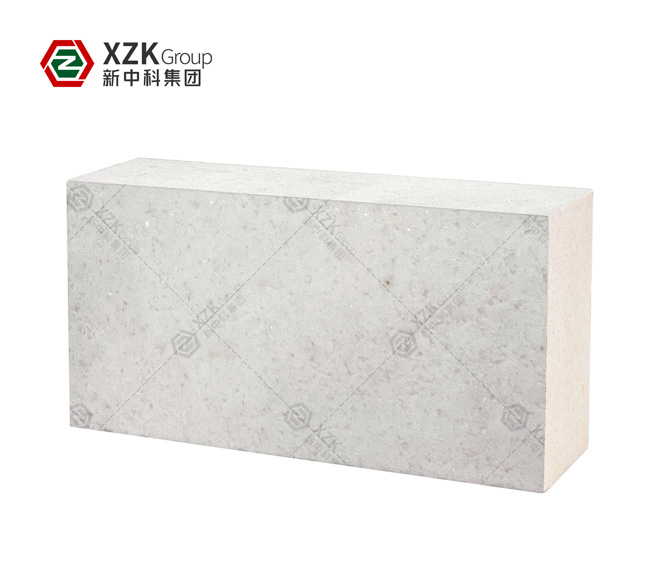
Corundum reinforced
Corundum Mullite Brick
XZK-CM80 · CM85 · CM90
Corundum crystals inter-embedded with mullite needles form a dense interlocking network. The higher alumina fraction raises refractoriness while the mullite phase absorbs thermal strain.
Al2O3 ≥ 80–90% · RUL ≥ 1700°C · Creep ≤ 0.3%
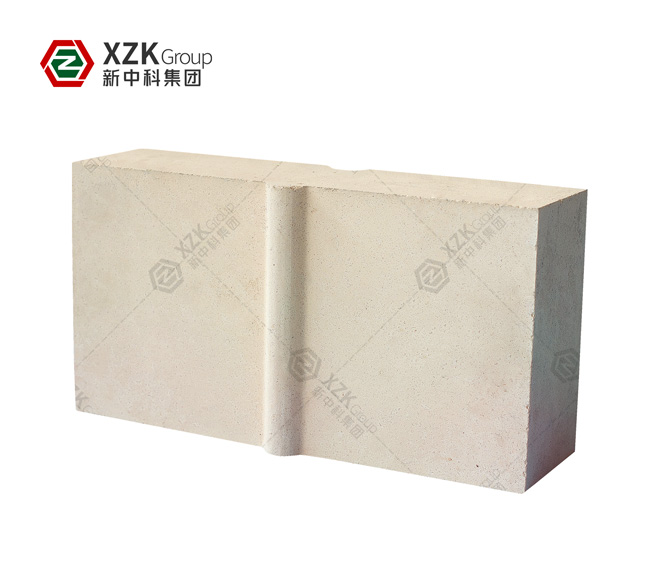
Zirconia bearing
Zircon Mullite Brick
XZK-ZM6 · ZM12 · ZM20 · ZM30
Zirconia additions arrest crack propagation and raise resistance to alkali vapour. Four grades span 6% to 30% ZrO2, letting you match zirconia content to the severity of the zone.
ZrO2 ≥ 6–30% · RUL ≥ 1680°C · CCS ≥ 80 MPa

Silicon carbide
Silica Mullite Brick
XZK-GM1650 · GM1600 · GM1550
Mullite matrix with silicon carbide, giving markedly better thermal shock resistance and abrasion resistance than plain mullite. Used in high-wear, high-cycling positions.
Al2O3 ≥ 60–65% · RUL ≥ 1550–1650°C · Thermal shock ≥ 10
Andalusite bonded
Silica Mullite Andalusite Brick
XZK-SMA75 · SSM75
A high-alumina grade combining mullite with silicon carbide and andalusite. The andalusite fraction gives exceptional volume stability, while SiC raises abrasion resistance above 95 MPa CCS.
Al2O3 ≥ 75% · SiC+SiO2 ≥ 30–35% · CCS ≥ 95–100 MPa
Technical Specifications
All values are typical for the grade and verified batch by batch in our in-house laboratory. Because a regenerator lining is bought as a system rather than a single brick, we list the full grade set so you can match material to zone without mixing suppliers.
Mullite bricks
| Property | XZK-ML70-A | XZK-ML70-B | XZK-ML65-C |
|---|---|---|---|
| Al2O3 (%) | ≥ 70 | ≥ 70 | ≥ 65 |
| Fe2O3 (%) | ≤ 1.2 | ≤ 0.2 | ≤ 0.8 |
| Bulk density (g/cm3) | ≥ 2.55 | ≥ 2.65 | ≥ 2.50 |
| Apparent porosity (%) | ≤ 18 | ≤ 17 | ≤ 17 |
| Cold crushing strength (MPa) | ≥ 80 | ≥ 80 | ≥ 75 |
| Refractoriness under load (0.2 MPa, °C) | ≥ 1620 | ≥ 1700 | ≥ 1600 |
3L-mullite and corundum mullite bricks
| Property | XZK-3L-ML50 | XZK-CM80 | XZK-CM85 | XZK-CM90 |
|---|---|---|---|---|
| Al2O3 (%) | ≥ 50 | ≥ 80 | ≥ 85 | ≥ 90 |
| Fe2O3 (%) | ≤ 0.8 | ≤ 0.15 | ≤ 0.20 | ≤ 0.20 |
| Bulk density (g/cm3) | ≥ 2.45 | ≥ 2.75 | ≥ 2.90 | ≥ 3.00 |
| Apparent porosity (%) | ≤ 15 | ≤ 18 | ≤ 17 | ≤ 17 |
| Cold crushing strength (MPa) | ≥ 80 | ≥ 85 | ≥ 90 | ≥ 90 |
| Refractoriness under load (0.2 MPa, °C) | ≥ 1600 | ≥ 1700 | ≥ 1700 | ≥ 1700 |
| Creep rate (1500°C × 5–50 h, %) | ≤ 0.5 (1400°C) | ≤ 0.3 | ≤ 0.3 | — |
Zircon mullite bricks
| Property | XZK-ZM6 | XZK-ZM12 | XZK-ZM20 | XZK-ZM30 |
|---|---|---|---|---|
| ZrO2 (%) | ≥ 6.0 | ≥ 12.0 | ≥ 20.0 | ≥ 30.0 |
| Al2O3 (%) | ≥ 65.0 | ≥ 60.0 | ≥ 58.0 | ≥ 48.0 |
| Fe2O3 (%) | ≤ 0.2 | ≤ 0.2 | ≤ 0.2 | ≤ 0.2 |
| Bulk density (g/cm3) | ≥ 2.8 | ≥ 2.9 | ≥ 3.1 | ≥ 3.3 |
| Apparent porosity (%) | ≤ 17 | ≤ 17 | ≤ 17 | ≤ 17 |
| Cold crushing strength (MPa) | ≥ 80 | ≥ 80 | ≥ 80 | ≥ 80 |
| Refractoriness under load (0.2 MPa, °C) | ≥ 1680 | ≥ 1680 | ≥ 1680 | ≥ 1680 |
Silica mullite grades
| Property | XZK-GM1650 | XZK-GM1600 | XZK-SMA75 | XZK-SSM75 |
|---|---|---|---|---|
| Al2O3 (%) | ≥ 65 | ≥ 63 | ≥ 75 | ≥ 75 |
| SiC + SiO2 (%) | — | — | ≥ 30 | ≥ 35 |
| Bulk density (g/cm3) | ≥ 2.65 | ≥ 2.60 | ≥ 2.65 | ≥ 2.68 |
| Cold crushing strength (MPa) | ≥ 85 | ≥ 90 | ≥ 95 | ≥ 100 |
| Refractoriness under load (0.2 MPa, °C) | ≥ 1650 | ≥ 1600 | ≥ 1650 | ≥ 1650 |
| Thermal shock (1100°C water-cooled, cycles) | ≥ 10 | ≥ 10 | ≥ 15 | ≥ 20 |
Test methods follow GB/T and ISO practice; ASTM equivalents and full certificates of analysis are issued with every shipment.
Where Mullite Bricks Are Used in a Glass Furnace
Mullite’s role in a glass tank is structural — it carries load and holds shape while other materials handle direct corrosion. It appears in the regenerator, the forehearth and the superstructure, in each case for a different reason.
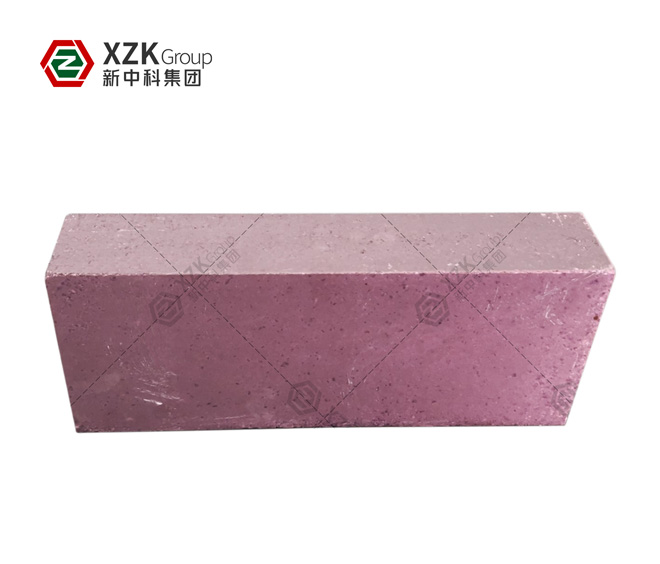
Regenerator checkerwork and chamber walls
The regenerator runs a three-zone duty cycle. Above 1100°C, checker bricks absorb thermal shock and the scouring of high-velocity alkali vapour. Between 800 and 1100°C, volatile alkali reacts with sulphur oxides to form sulphate condensates that corrode brick and block flues. Below 800°C, the checkerwork must simply carry the accumulated dead weight of everything above it
and that is where mullite’s low creep rate is decisive.
Typical grades: XZK-ML70-A / ML70-B (structural courses), XZK-3L-ML50 (dimensional stability)
Rider arch and rider bricks
The rider arch is the foundation of the entire checkerwork. It supports continuous compressive load at temperature for years, with no opportunity for replacement during a campaign. Creep resistance is the only specification that matters.
Typical grades: XZK-ML70-B, XZK-CM85
Forehearth and feeder channel covers
Above the melt, cover blocks are cycled by gob forming and must not shed particles into the glass. Mullite’s thermal shock resistance prevents the spalling that would contaminate the product, and its volume stability keeps the joints tight.
Typical grades: XZK-CM85, XZK-CM90, XZK-ML70-B
Superstructure — breastwalls and port crowns
In furnaces where sand dust carry-over is significant but alkali levels are moderate, mullite grades outperform fireclay by a wide margin and cost less than full corundum. They hold their volume against the upward migration of alkali vapour.
Typical grades: XZK-GM1650, XZK-SMA75
Crown and crown corner (with zirconia grades)
Where alkali penetration and thermal cycling are both severe, zircon mullite grades add a zirconia fraction that arrests crack growth. Higher ZrO2 content is specified as severity rises.
Typical grades: XZK-ZM12 / ZM20 / ZM30
High-wear and high-cycling positions
Silica mullite and silica mullite andalusite grades add silicon carbide to the matrix, raising abrasion resistance and thermal shock tolerance beyond what plain mullite can deliver. Used where mechanical wear accompanies thermal cycling.
Typical grades: XZK-GM1650, XZK-SMA75, XZK-SSM75
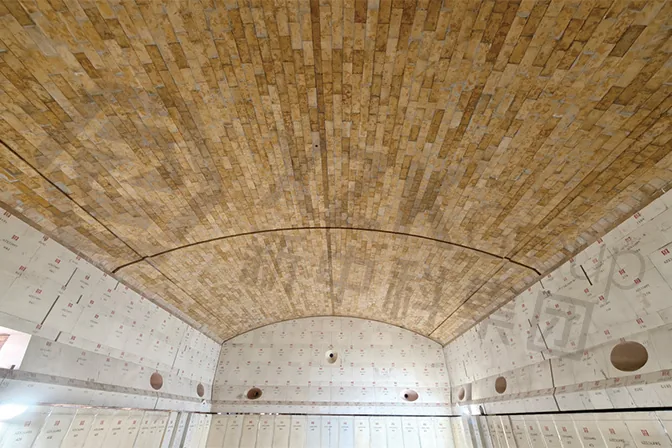
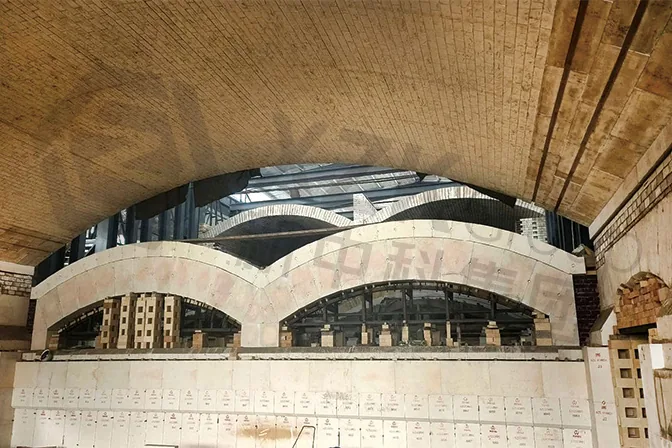
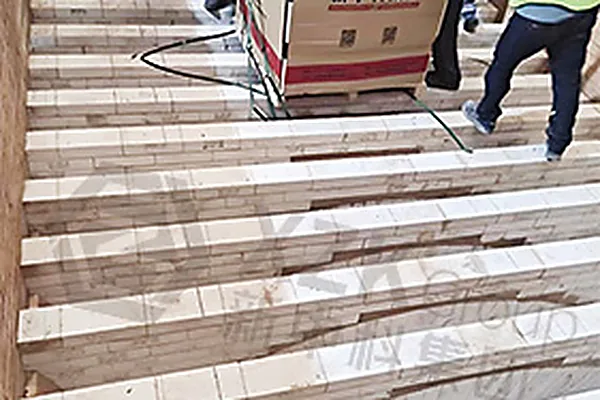
On Site — Structural Mullite in Service
The crown, the structural courses and the regenerator checkerwork are where mullite carries load without creeping.
Failure Mechanisms and How Mullite Grades Defeat Them
Refractory life is decided by whichever mechanism reaches the brick first. In a regenerator, four mechanisms dominate — and each calls for a different mullite variant.
How to Select the Right Mullite Brick
Match the grade to the dominant mechanism, not to the highest specification available. Over-specifying the whole regenerator raises cost without extending life.
| If the duty is… | Dominant risk | Specify | Grade |
|---|---|---|---|
| Regenerator top courses, > 1100°C | Thermal shock + alkali scour | Zircon mullite / magnesia | XZK-ZM20 / ZM30 |
| Regenerator condensation zone, 800–1100°C | Sulphate attack + flue blockage | Chrome corundum with mullite courses | XZK-CC10 / CC12 |
| Regenerator bottom courses, < 800°C | Creep under accumulated load | Low-creep mullite | XZK-ML70-B / CM85 |
| Rider arch and foundation | Creep under sustained load | High-performance mullite | XZK-ML70-B |
| Forehearth cover blocks | Thermal shock → spalling contamination | Corundum mullite | XZK-CM85 / CM90 |
| Superstructure, heavy sand carry-over | Abrasion + volume instability | Silica mullite | XZK-GM1650 |
| High-wear, high-cycling position | Abrasion + thermal shock | SiC-bearing mullite | XZK-SMA75 / SSM75 |
| Volume-critical structural course | Dimensional drift | 3L mullite | XZK-3L-ML50 |
Three practical rules from our application engineers:
- Do not use one grade across the whole regenerator. The three temperature zones impose different mechanisms. Chrome corundum in the hot and condensation zones, mullite in the structural courses below, is usually both cheaper and longer lasting than a single premium grade throughout.
- Creep is the specification that matters at the bottom. Refractoriness under load tells you about the top of the regenerator; creep rate tells you what happens at the bottom after three years. Ask for both figures.
- Tell us the furnace, not just the brick. Two regenerators of identical dimensions can need different grades if batch composition, carry-over or firing cycle differ. Full operating data produces the right specification.
Manufacturing and Quality Control
Mullite refractories are unforgiving of process variation. Uneven porosity between batches becomes uneven wear in service, and uneven wear is what ends a campaign early.
Four automatic batching lines feed 20 CNC presses ranging from 630 to 2000 tonnes, so brick density is controlled by press force rather than operator judgement. Firing runs through four 108-metre fully automatic tunnel kilns and five ultra-high-temperature shuttle kilns, giving the uniform soak these materials need to complete densification.
Quality control covers the full chain: incoming raw material assay, in-process density and dimensional checks, and finished-brick testing for bulk density, apparent porosity, cold crushing strength and refractoriness under load. Every shipment leaves with a certificate of analysis.
Mullite bricks are produced by high-temperature sintering from high-purity mullite and alumina raw materials. Firing at controlled soak temperatures completes the mullitisation reaction that gives the brick its creep resistance — which is why the kiln curve, not just the raw material, decides final performance.
XZK Group holds ISO 9001, ISO 14001, ISO 45001 and ISO 50001 certification, is recognised as a National High-Tech Enterprise, and operates the Henan Provincial Engineering Technology Research Centre for Sintered Refractories for Glass Furnaces. We have contributed to standards including JC/T 2574-2020 (Sillimanite bricks for glass furnaces), GB/T 4984-2023 (chemical analysis methods for zirconium-containing refractories) and T/CSTM 00853-2024 (chrome-zirconia-corundum bricks for glass furnace regenerators).
Industries We Serve
Glass
Float, container, fibre and specialty glass tanks. Regenerators, forehearths, superstructures and rider arches, supplied as a zoned lining system rather than individual products.
Iron and steel
Blast furnace linings, hot blast stove checkerwork and ladle linings, where mullite’s volume stability under load extends campaign life.
Ceramics
Kiln furniture, tunnel kiln linings and high-temperature structural positions where thermal cycling is continuous.
Petrochemical and power
Reactor linings, gasifier refractory and high-temperature process equipment subject to combined thermal and mechanical load.
Frequently Asked Questions
What is the difference between mullite brick and high alumina brick?
Crystal phase and alumina content. High alumina bricks carry 55–80% Al2O3 with corundum as a growing phase; mullite bricks run 50–75% Al2O3 with mullite as the dominant crystal phase. The higher mullite fraction gives better creep resistance, thermal shock resistance and volume stability — which is why mullite is specified in regenerator structural courses.
Why is creep rate more important than refractoriness under load in a regenerator?
Refractoriness under load describes the temperature at which a brick begins to deform under a short test. Creep rate describes how much it deforms over 5 to 50 hours at temperature. A regenerator bottom course carries load for years, so it is the long-duration behaviour — creep — that decides whether the structure stays true.
Which mullite grade should I use for a glass furnace regenerator?
Use low-creep mullite (XZK-ML70-B or XZK-CM85) for structural courses and the rider arch, and zircon mullite (XZK-ZM20 / ZM30) for upper courses exposed to alkali vapour. In the condensation zone at 800–1100°C, chrome corundum grades resist the sulphate attack that mullite alone cannot.
What does "3L" mean in 3L-mullite brick?
Three-low: low apparent porosity, low creep rate and low permanent linear change. These bricks are specified where dimensional predictability over a long campaign matters more than peak refractoriness — typically in structural courses and precision brickwork.
Can mullite bricks be supplied in custom shapes?
Yes. We press to drawing for standard shapes and slip cast or vibration cast for complex geometries. Cast large blocks (such as XZK-ML65-C) cover oversized checkerwork and structural pieces that cannot be pressed. Send a drawing and we will confirm feasibility and tooling requirements.
What is your minimum order quantity and lead time?
MOQ depends on grade and shape. Standard mullite and corundum mullite shapes have no practical minimum beyond a full pallet; cast custom shapes depend on tooling. Typical lead time is 25–40 days for standard grades, with emergency stock held for common repair shapes.
Do you provide technical support for regenerator design?
Yes. Our application engineers provide zoned lining recommendations, thermal calculation support and bricklaying layout planning. Send us your furnace data — dimensions, batch composition, pull rate and firing cycle — and we will propose a grade for each zone rather than a single product.
Why Buy Mullite Bricks from XZK Group
We are a sintered refractory specialist, not a trading company. Mullite, corundum, zircon, AZS, magnesia and insulating bricks are all produced in our own plant, which means one point of responsibility for a complete glass furnace lining — and one engineering team to hold accountable if a zone underperforms.
Our application engineers have supplied refractories to glass manufacturers across Asia, Europe, Africa and the Middle East, including float lines, container plants and fibre glass producers. That field experience is what turns a grade list into a working lining design: we read the furnace, the batch and the pull rate, then specify the zones.
Get your mullite brick specification reviewed — free
Send us your regenerator data or a brick list. Our engineers will confirm the right grade for each zone, flag any mismatch, and return a quotation within 24 hours.
Related refractory products
Mullite bricks work as part of a complete glass furnace lining. Depending on the zone, they are specified alongside sintered mullite bricks, corundum mullite bricks, zircon mullite bricks, chrome corundum bricks, sillimanite bricks, andalusite bricks and mullite insulating bricks. See the alumina-silica series for zoning guidance or browse all refractory products.
 WhatsApp
 WeChat
 WhatsApp
 WeChat