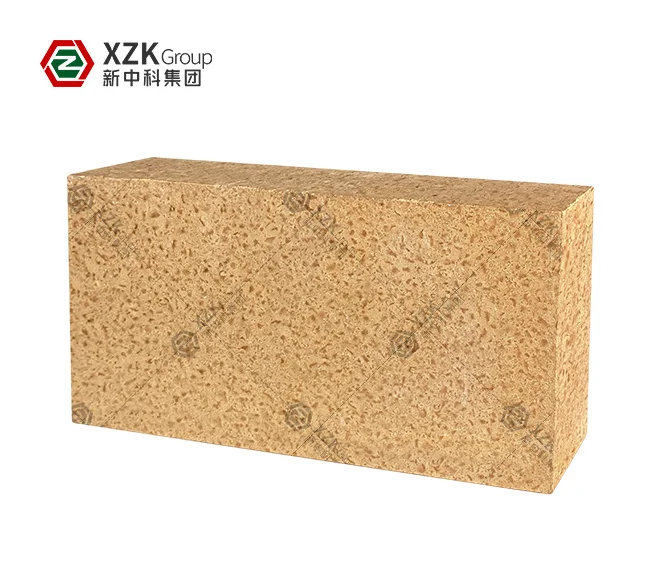
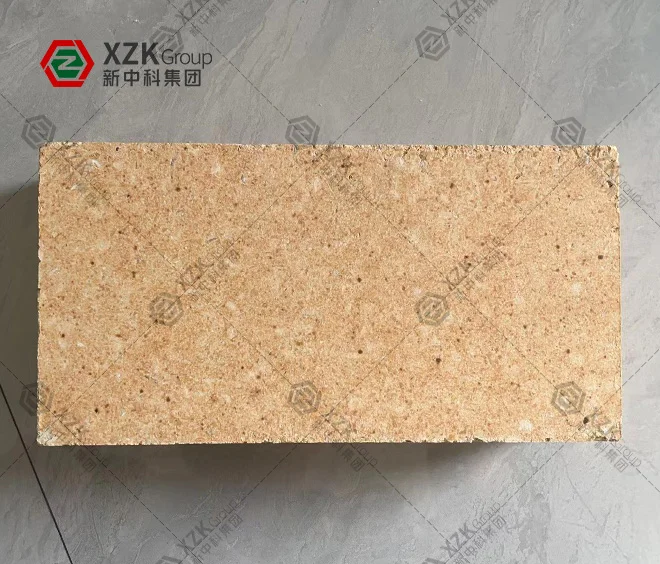
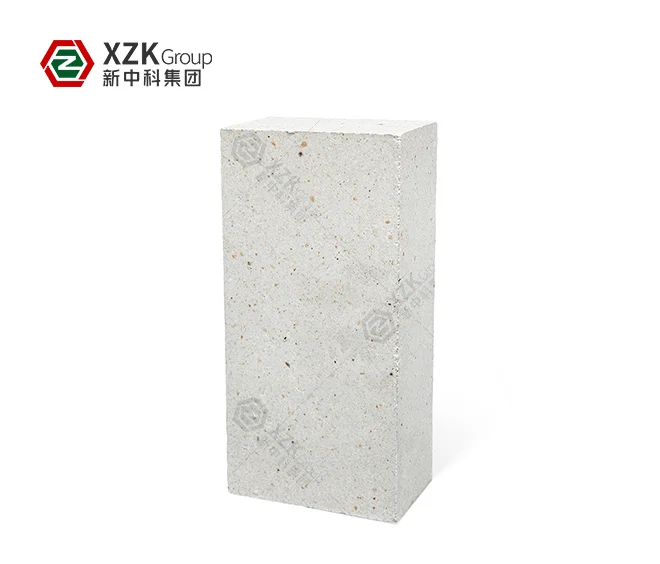
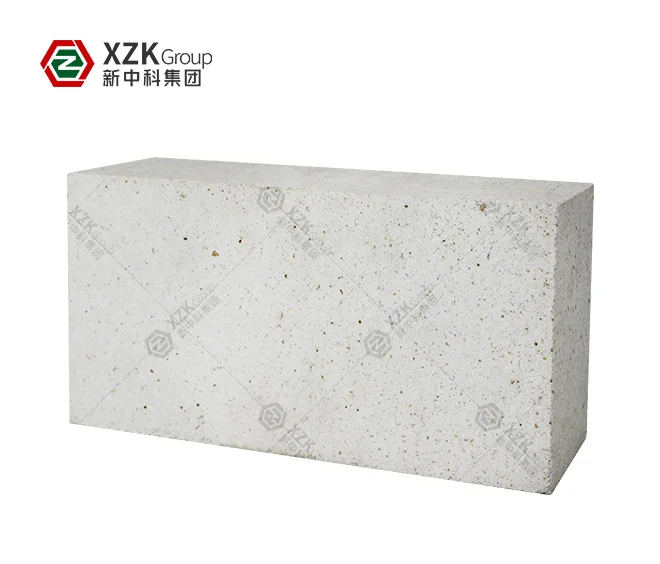
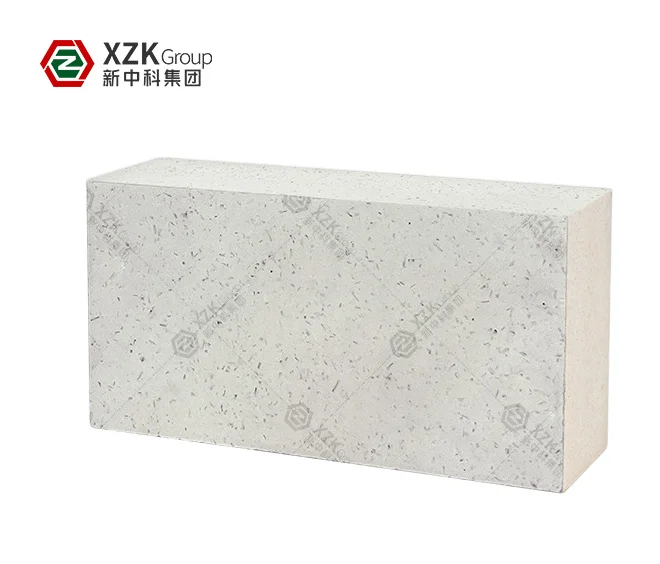
Andalusite bricks are alumina-silica refractories based on andalusite, one of the three Al2SiO5 minerals, with 57–65% Al2O3. Andalusite does not fully convert to mullite below about 1400°C, so the fired brick keeps a core of low-expansion andalusite crystals inside a dense mullite shell — a structure that produces the material's signature resistance to thermal spalling.
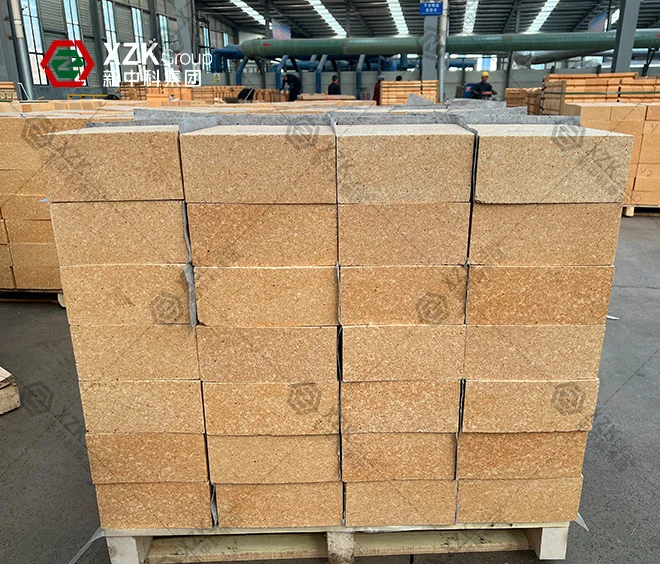
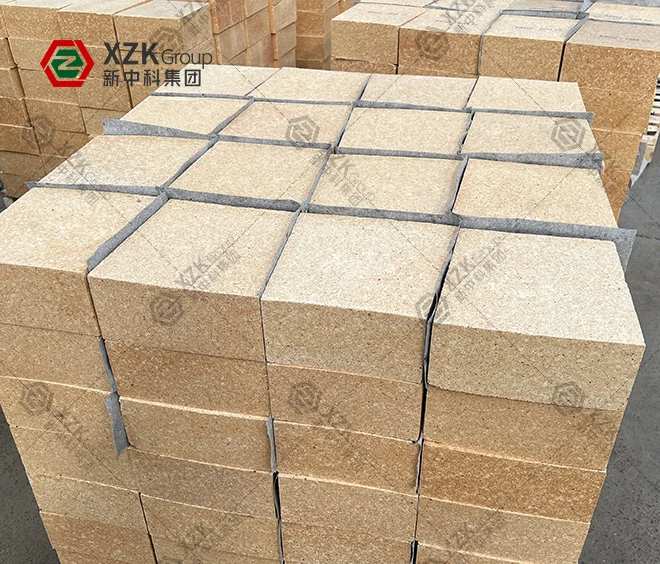
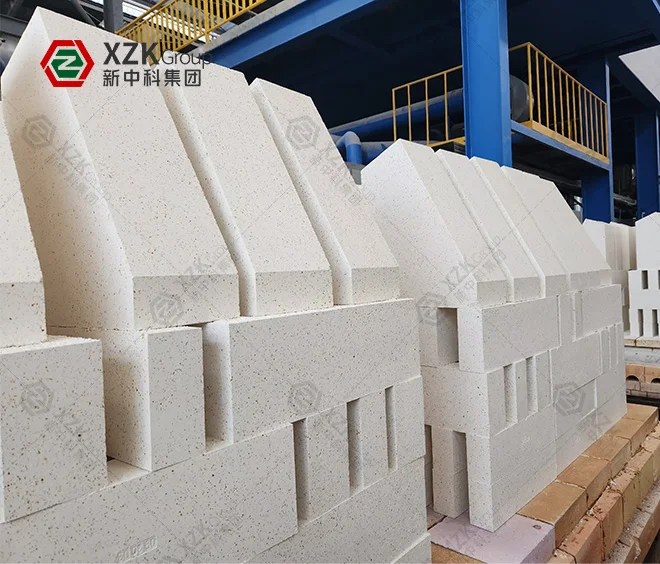
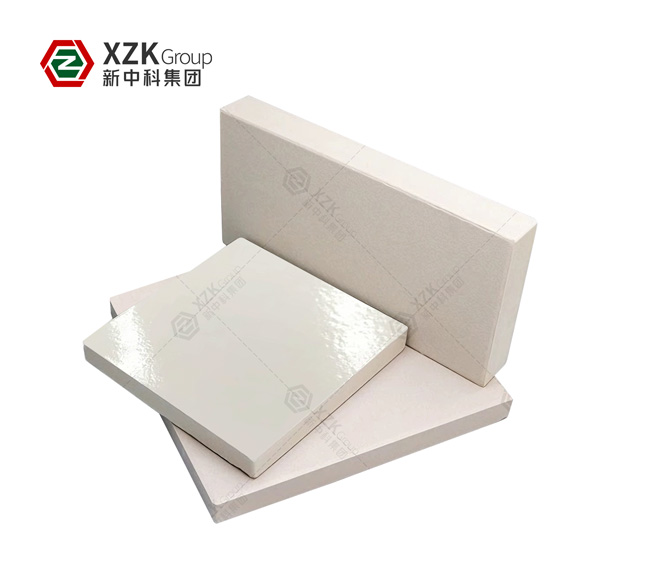
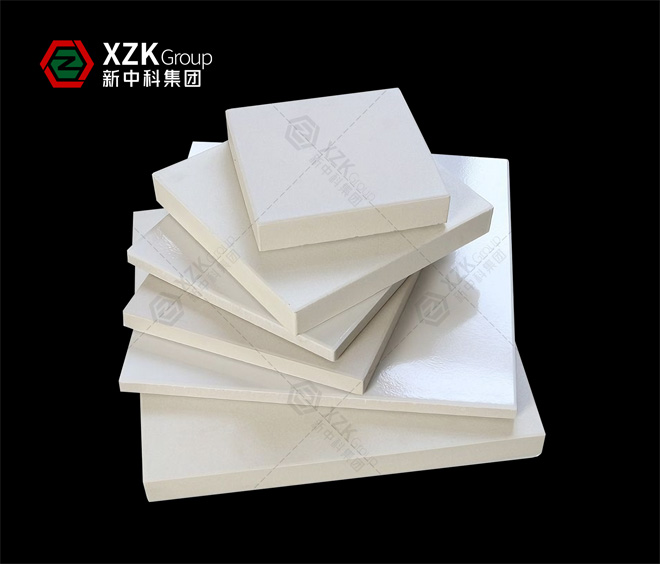
XZK Group produces andalusite bricks in pressed grades XZK-AN57-P, XZK-AN60-P and XZK-AN65-P and in a cast grade XZK-AN60-C. They are used in the same structural and thermal-shock positions as sillimanite, and XZK frequently supplies both so that a rider arch or a regenerator can be zoned grade by grade.
Why Andalusite Resists Thermal Spalling
Andalusite and sillimanite share a chemistry but not a crystal habit. Raw andalusite has a low coefficient of thermal expansion along one crystal axis, and in the kiln it mullitises only at the surface of each grain, forming a dense mullite shell around an unreacted andalusite core. Because the two phases expand differently, the fired body contains a fine, controlled network of microcracks.
Those microcracks are the reason an andalusite brick survives thermal shock so well: they blunt and deflect a propagating crack instead of letting it run through the brick. The mechanical result is a material with 15–25 water-cooling cycles of thermal shock resistance, high refractoriness under load, and very good volume stability, because the expansion that accompanies mullitisation is taken up inside the brick during firing rather than in service.
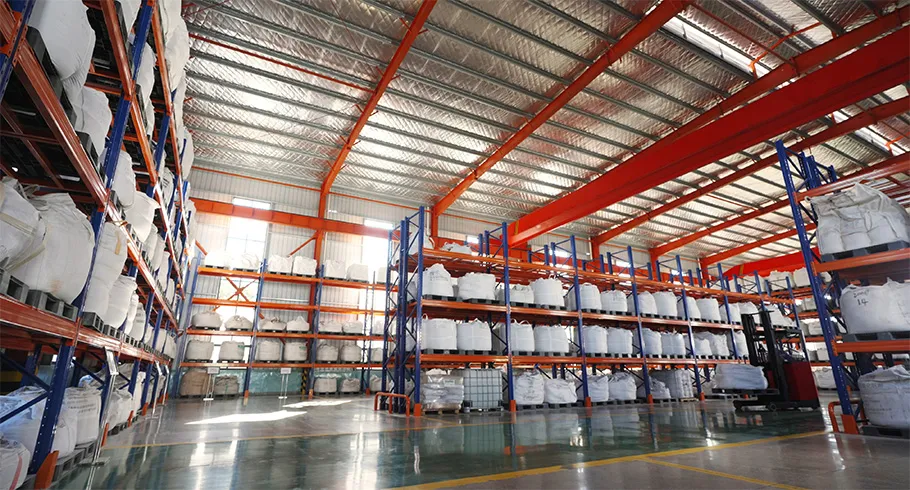
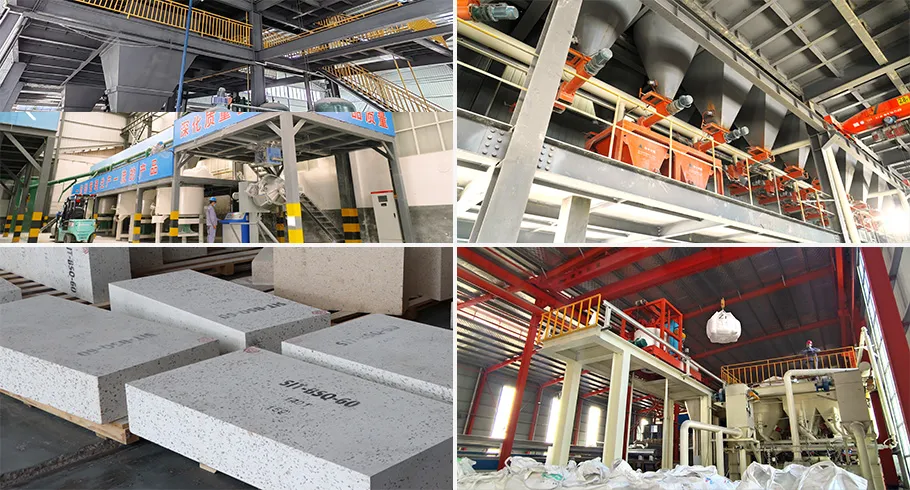
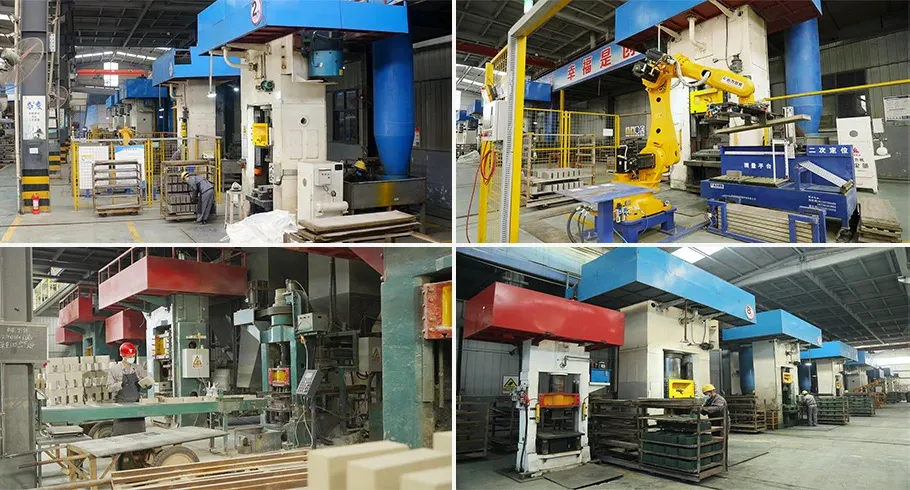
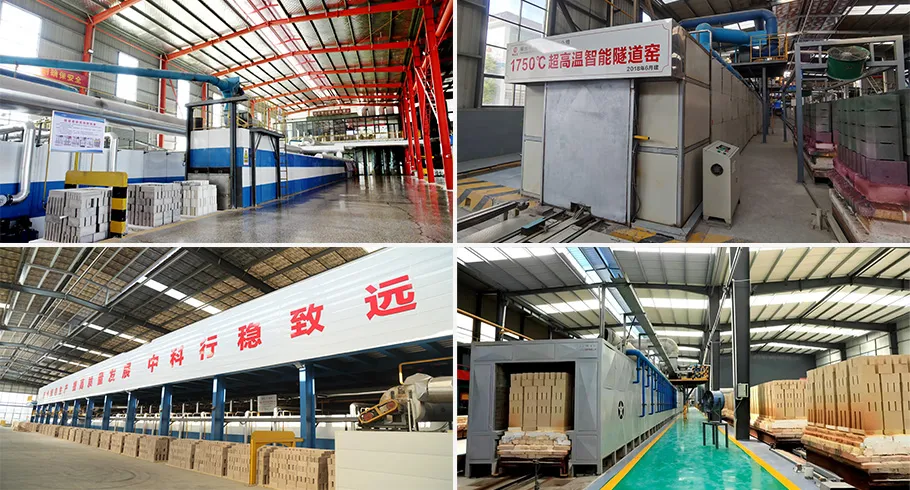
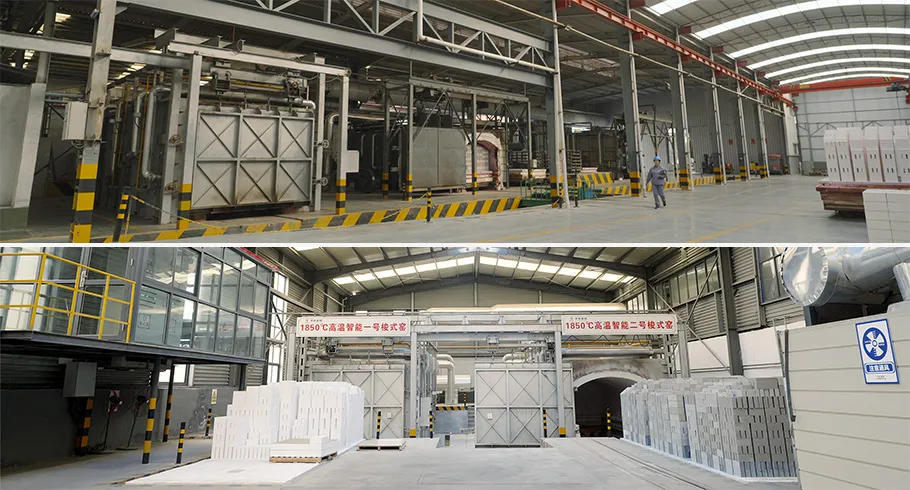
Production follows the same route as our sillimanite grades — graded andalusite aggregate, automatic batching, pressing or casting, drying and high-temperature firing. The firing schedule is set so that mullitisation is complete at the grain surface without over-firing the core, which is what preserves the crack-toughened microstructure.
Key Properties
- Thermal shock resistance of 15–25 water-cooling cycles at 1100°C, from the mullite-shelled, microcracked microstructure.
- Refractoriness under load of 1560–1650°C at 0.2 MPa across the pressed grades.
- Low and stable thermal expansion, with the mullitisation expansion absorbed during firing rather than in the furnace.
- Excellent volume stability, keeping joint widths predictable across a long campaign.
- Bulk density of 2.40–2.50 g/cm3 and cold crushing strength of at least 70 MPa for the pressed grades.
- Good alkali vapour tolerance, making the material suitable for the upper structural courses of a regenerator.











 WhatsApp
 WeChat
 WhatsApp
 WeChat