

Insulation Bricks
Cut furnace heat loss without adding structural deadweight — densities from 0.6 to 1.7 g/cm³, from clay insulating brick to 99% alumina bubble, from our dedicated lightweight brick plant.
Insulation bricks do two jobs in any high-temperature furnace: they cut heat loss, and they do it without adding weight to a structure that is already carrying its own mass at temperature. A crown or an arch cannot be insulated with dense brick — it would sag under the extra load. The same logic governs kiln cars, boiler walls, reheating furnaces and cement kiln back-up linings.
XZK Group runs a dedicated lightweight brick plant in Xinmi, Henan. It produces four families of insulating refractory — clay insulating brick, high alumina insulating brick, mullite insulating brick and alumina bubble brick — plus lightweight silica brick for crown insulation. Densities run from 0.6 to 1.7 g/cm³ and thermal conductivity from 0.19 to 0.55 W/(m·K).
Because that plant makes insulation and nothing else, the entire insulating layer of a furnace can come from one source with consistent chemistry, density and dimensions — whether the furnace is melting glass, firing ceramics, burning cement clinker, holding aluminium or reheating steel.
What Are Insulation Bricks?
Insulation bricks are refractories engineered for low thermal conductivity rather than maximum refractoriness. They achieve this by introducing controlled porosity into the brick body — either through lightweight aggregates, burnout additives, or in the case of alumina bubble brick, hollow spheres of fused alumina.
The result is a brick that weighs a fraction of its dense equivalent while still standing up to furnace temperatures. That combination — light and heat resistant — is what makes insulation brick useful, because it can be stacked in multiple layers behind a working lining or laid directly over an arch.
Why furnace insulation decides your energy bill
The insulation of all components, and the crown in particular, has a decisive influence on the heat loss of a glass furnace. Modern crown designs target heat losses below 1250 W/m², and insulated concepts at the leading edge achieve under 1050 W/m². Since the tank temperature rises as a result — up to 1600°C or slightly more — only silica bricks with outstanding creep resistance can be used in the working layer, while lightweight silica brick handles the insulation above it.
Types and Grades of Insulation Bricks
Four families cover the insulation requirements of high-temperature furnaces. They differ in base material and density, and therefore in how much temperature each can take before the insulation layer itself must change.

Economical base layer
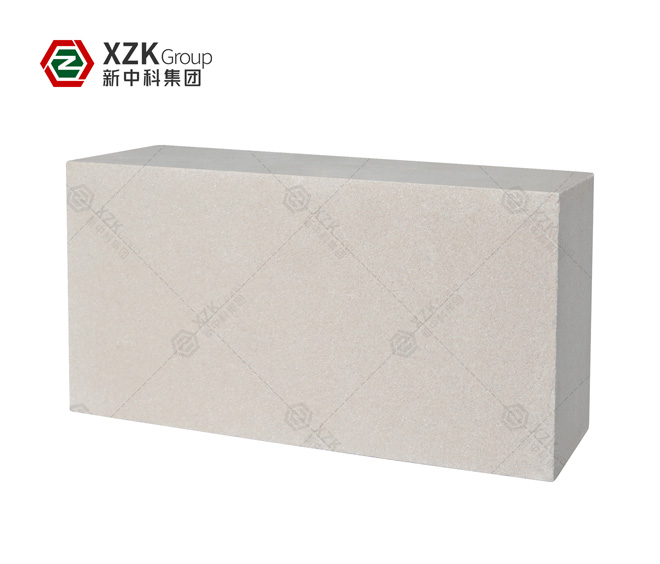
Clay Insulating Brick
XZK-LC135-1.3 · LC135-1.0 · LC125-0.8 · LC120-0.6
Fireclay-based insulating brick for the outermost layer of a furnace lining. Four densities from 0.6 to 1.3 g/cm³ let you build a graded insulation stack with falling conductivity outward.
Density 0.6–1.3 g/cm³ · Thermal conductivity ≤ 0.25–0.55 W/(m·K) · CCS ≥ 1.5–8.0 MPa
Higher temperature
High Alumina Insulating Brick
XZK-LI140-1.2 · LI140-1.0 · LI140-0.8 · LI135-0.6
Alumina-based insulating brick rated to 1400°C. Used directly behind the working lining where clay insulating brick cannot take the interface temperature, and as tank bottom insulation below the paving.
Al2O3 ≥ 48% · Density 0.6–1.2 g/cm³ · Conductivity ≤ 0.25–0.50 W/(m·K)

Lowest conductivity
Mullite Insulating Brick
XZK-JM23 · JM26 · JM28 · JM30
Mullite-based lightweight brick with the lowest thermal conductivity in the range — down to 0.19 W/(m·K). JM23 to JM30 correspond to the familiar JM classification used across the refractory industry.
Al2O3 42–72% · Density 0.6–1.1 g/cm³ · Conductivity ≤ 0.19–0.43 W/(m·K)

Highest purity
Alumina Bubble Brick
XZK-AB90 · AB93 · AB95 · AB99
Made from hollow fused-alumina spheres, giving very low density with high refractoriness and excellent thermal shock resistance. The 99% grade carries almost no iron, making it suitable where contamination matters.
Al2O3 90–99% · Density 1.35–1.70 g/cm³ · RUL ≥ 1650–1700°C

Crown insulation
Lightweight Silica Brick
XZK-LS160-0.8 · LS162-1.0 · LS164-1.2
Silica-based lightweight brick for crown insulation, where the working layer is silica and the insulation must match its thermal expansion. Three densities trade insulation performance against compressive strength.
SiO2 ≥ 91% · Density 0.8–1.2 g/cm³ · RUL ≥ 1600–1640°C
Monolithic alternative
Insulating Castable
XZK insulating castables
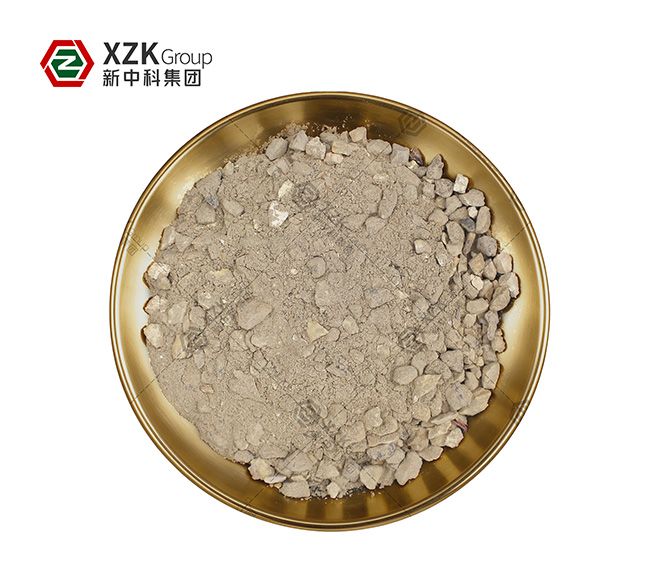
Where a brick shape is impractical — over a crown, or around complex geometry — lightweight insulating castables provide the same thermal performance and can be applied by casting or gunning.
Applied in layers behind a dense crown sealing to achieve the target heat flux.
Technical Specifications
Insulation performance is decided by density and conductivity together. Compare grades on both, not on density alone — a slightly denser brick with lower conductivity can deliver a better thermal result.
Mullite insulating bricks
| Property | XZK-JM23 | XZK-JM26 | XZK-JM28 | XZK-JM30 |
|---|---|---|---|---|
| Al2O3 (%) | 42 | 45 | 54 | 72 |
| Fe2O3 (%) | ≤ 1.2 | ≤ 1.0 | ≤ 0.9 | ≤ 0.55 |
| Bulk density (g/cm3) | 0.6 | 0.8 | 0.7 | 1.1 |
| Cold crushing strength (MPa) | ≥ 1.5 | ≥ 2.3 | ≥ 2.0 | ≥ 3.5 |
| Thermal conductivity (350°C, W/(m·K)) | ≤ 0.19 | ≤ 0.24 | ≤ 0.21 | ≤ 0.43 |
High alumina and clay insulating bricks
| Property | XZK-LI140-1.2 | XZK-LI140-1.0 | XZK-LI140-0.8 | XZK-LC135-1.3 | XZK-LC120-0.6 |
|---|---|---|---|---|---|
| Al2O3 (%) | ≥ 48 | ≥ 48 | ≥ 48 | — | — |
| Bulk density (g/cm3) | ≤ 1.2 | ≤ 1.0 | ≤ 0.8 | ≤ 1.3 | ≤ 0.6 |
| Cold crushing strength (MPa) | ≥ 8.0 | ≥ 3.0 | ≥ 2.5 | ≥ 8.0 | ≥ 1.5 |
| Thermal conductivity (350°C, W/(m·K)) | ≤ 0.50 | ≤ 0.40 | ≤ 0.35 | ≤ 0.55 | ≤ 0.25 |
Alumina bubble bricks
| Property | XZK-AB90 | XZK-AB93 | XZK-AB95 | XZK-AB99 |
|---|---|---|---|---|
| Al2O3 (%) | ≥ 90 | ≥ 93 | ≥ 95 | ≥ 99 |
| Fe2O3 (%) | ≤ 0.5 | ≤ 0.4 | ≤ 0.2 | ≤ 0.1 |
| Bulk density (g/cm3) | ≤ 1.35 | ≤ 1.40 | ≤ 1.60 | ≤ 1.70 |
| Cold crushing strength (MPa) | ≥ 8 | ≥ 12 | ≥ 18 | ≥ 20 |
| Refractoriness under load (0.1 MPa, °C) | ≥ 1650 | ≥ 1680 | ≥ 1700 | ≥ 1700 |
Lightweight silica bricks
| Property | XZK-LS160-0.8 | XZK-LS162-1.0 | XZK-LS164-1.2 |
|---|---|---|---|
| SiO2 (%) | ≥ 91 | ≥ 91 | ≥ 91 |
| Al2O3 (%) | ≤ 1.0 | ≤ 1.0 | ≤ 1.0 |
| Bulk density (g/cm3) | ≤ 0.8 | ≤ 1.0 | ≤ 1.2 |
| Cold crushing strength (MPa) | ≥ 2.0 | ≥ 3.0 | ≥ 4.0 |
| Refractoriness under load (°C) | ≥ 1600 | ≥ 1620 | ≥ 1640 |
Test methods follow GB/T and ISO practice; ASTM equivalents and full certificates of analysis are issued with every shipment.
Where Insulation Bricks Are Used
Insulation goes where heat loss is highest and structural load is most sensitive. The zones below are laid out on a glass tank because it is the hardest case — high temperature, heavy structural load and a corrosive atmosphere at once. The same reasoning governs kiln cars, boilers, reheating furnaces and cement kiln back-up linings.
Crown insulation — the largest single heat loss
The crown radiates heat across its whole area, so it dominates furnace heat loss. Insulation must reduce that loss without adding deadweight to the arch, because a crown that sags is a structural failure. Lightweight silica brick matches the thermal expansion of the silica working layer above it, while low-density grades keep the added load minimal.
Typical grades: XZK-LS160-0.8, XZK-LS162-1.0, XZK-LS164-1.2, silica insulating castables
Tank bottom insulation layer
Below the bottom paving and sub-layer, insulation reduces heat loss from the melting zone and raises the temperature the working layer sees — which itself improves melt quality and energy efficiency. The key requirement is withstanding the interface temperature without creeping under the weight of the paving above.
Typical grades: XZK-LI140-1.0, XZK-LI140-1.2 (high strength), XZK-LC135-1.0
Regenerator casing and outer wall
The regenerator casing has the best cost-performance ratio when the insulation stack is graded: denser material inside, lightweight outside. Insulation brick reduces the shell temperature and protects the steel structure from thermal distortion.
Typical grades: XZK-LC135-1.0, XZK-LC125-0.8, XZK-JM26
Suspended walls and doghouse
Suspended structures carry their own weight and cannot tolerate heavy insulation. Lightweight high alumina brick provides thermal protection at a fraction of the mass. In the doghouse area, it also backs the working lining against batch dust erosion.
Typical grades: XZK-LI140-0.8, XZK-LI140-1.0
Forehearth and feeder insulation
In the conditioning section, temperature uniformity matters more than raw insulation. Low conductivity mullite grades hold a stable thermal profile along the channel, which translates directly into consistent gob weight and fewer forming defects.
Typical grades: XZK-JM23, XZK-JM26, XZK-JM28
High-purity and high-temperature zones
Where the insulation layer itself meets high temperature or contamination risk, alumina bubble brick provides low density with high refractoriness. The 99% grade carries under 0.1% Fe2O3, making it suitable where iron contamination cannot be tolerated.
Typical grades: XZK-AB93, XZK-AB95, XZK-AB99
On Site — Back-Up Insulation in Place
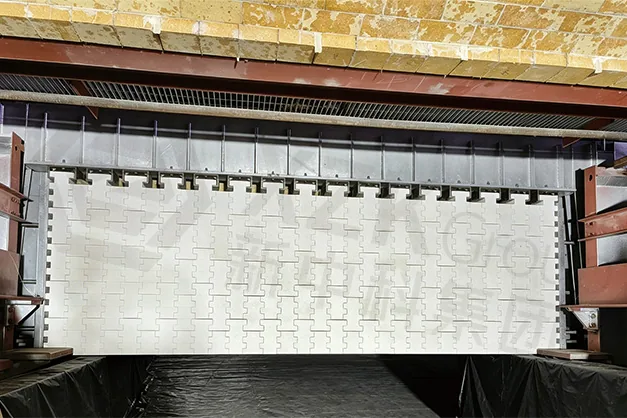
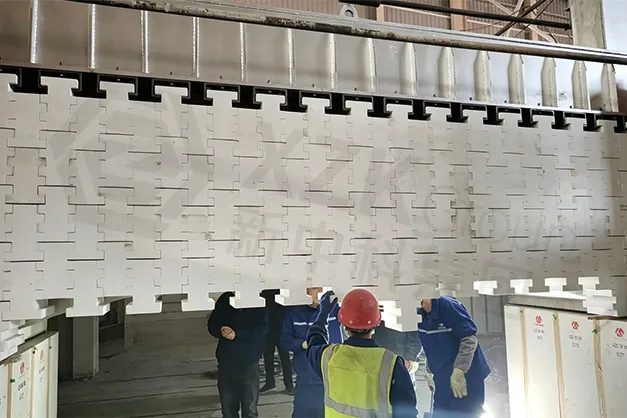
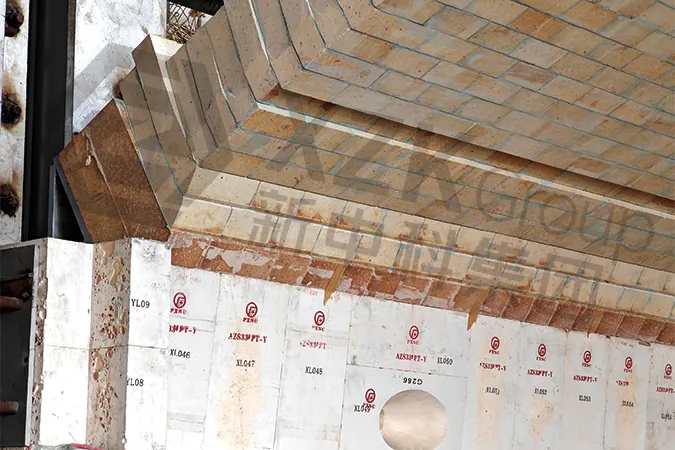
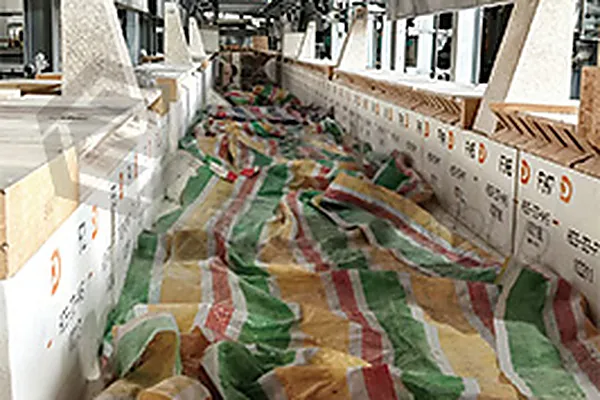
Insulation is never the hot face, but it is always visible in these photographs — behind the crown corner, inside the suspended wall panels and around the forehearth channel.
Why Insulation Layers Fail — and How to Prevent It
Insulation is often treated as a secondary detail, and that is exactly why it fails. Four failure modes account for most insulation problems in high-temperature furnaces.
How to Select the Right Insulation Brick
Work through interface temperature first, then conductivity, then load. Selecting on price per brick rather than on delivered thermal performance is how insulation budgets get wasted.
| If the application is… | Interface temp. | Priority | Grade |
|---|---|---|---|
| Crown insulation over silica working layer | to 1500°C | Match silica expansion | XZK-LS160-0.8 / LS162-1.0 |
| Directly behind a working lining | to 1400°C | Temperature resistance | XZK-LI140-1.0 / LI140-1.2 |
| Tank bottom insulation below paving | to 1200°C | Load bearing + insulation | XZK-LI140-1.2 |
| Regenerator casing, inner layer | to 1200°C | Temperature + strength | XZK-LC135-1.3 |
| Regenerator casing, outer layer | to 1000°C | Lowest cost insulation | XZK-LC120-0.6 / LC125-0.8 |
| Minimum conductivity required | to 1260°C | Lowest conductivity | XZK-JM23 / JM26 |
| High purity, contamination sensitive | to 1700°C | Purity + refractoriness | XZK-AB95 / AB99 |
| Kiln car top or tunnel kiln lining | to 1300°C | Low mass + low conductivity | XZK-JM23 / LC125-0.8 |
| Boiler, reformer or process heater wall | to 1200°C | Lowest conductivity | XZK-JM23 / JM26 |
| Cement or lime kiln back-up lining | to 1200°C | Temperature + strength | XZK-LI140-1.2 / LC135-1.3 |
| Complex geometry, no brick possible | to 1300°C | Formability | XZK insulating castables |
Three practical rules:
- Grade the stack, don’t use one brick throughout. A three-layer insulation stack with falling density outward outperforms a single-grade stack of the same total thickness, at lower cost.
- Check the interface, not just the cold face. The temperature where insulation meets the working lining decides which family you can use. Everything else follows from that number.
- Account for the weight you are adding. On a crown or suspended wall, insulation mass is structural load. Ask for the density figure alongside the conductivity figure, every time.
Manufacturing and Quality Control
Insulating refractories are defined by their pore structure, which makes process control more demanding than for dense brick — an inconsistent pore structure shows up directly as inconsistent thermal performance.
Four automatic batching lines feed 20 CNC presses ranging from 630 to 2000 tonnes, so brick density is controlled by press force rather than operator judgement. Firing runs through four 108-metre fully automatic tunnel kilns and five ultra-high-temperature shuttle kilns, giving the uniform soak these materials need to complete densification.
Quality control covers the full chain: incoming raw material assay, in-process density and dimensional checks, and finished-brick testing for bulk density, apparent porosity, cold crushing strength and refractoriness under load. Every shipment leaves with a certificate of analysis.
Clay, high alumina and mullite insulating bricks are produced by combining lightweight aggregates or burnout additives with the base material, then firing to a controlled density. Alumina bubble brick uses hollow fused-alumina spheres as the aggregate, which is what allows both low density and high refractoriness in the same body.
XZK Group holds ISO 9001, ISO 14001, ISO 45001 and ISO 50001 certification, is recognised as a National High-Tech Enterprise, and operates the Henan Provincial Engineering Technology Research Centre for Sintered Refractories for Glass Furnaces. We have contributed to standards including JC/T 2574-2020 (Sillimanite bricks for glass furnaces), GB/T 4984-2023 (chemical analysis methods for zirconium-containing refractories) and T/CSTM 00853-2024 (chrome-zirconia-corundum bricks for glass furnace regenerators).
Industries We Serve
Glass
Crown and tank bottom insulation, regenerator casing and forehearth channels in float, container and fibre glass furnaces. Crown insulation is the most demanding case — see the zone notes above.
Cement and lime
Rotary kiln and preheater back-up insulation, cooler and calciner linings, where every degree of shell temperature is paid for in fuel.
Iron and steel
Ladle and tundish backing insulation, hot blast stove casings, annealing and reheating furnace linings — insulation that cuts the fuel bill per tonne.
Ceramics and glass fibre
Kiln car tops, tunnel and shuttle kiln linings and fibre drawing bushings, where lightweight brick also cuts the mass that has to be pushed through the kiln.
Non-ferrous metallurgy
Aluminium holding and melting furnace roofs, copper anode and shaft furnace back-up linings, where low-iron grades prevent contamination of the melt.
Petrochemical and power
Boiler, reformer, cracking furnace and process heater insulation, where low conductivity lowers shell temperature, protects the steel structure and cuts fuel consumption.
Frequently Asked Questions
What is the difference between insulating firebrick and dense firebrick?
Density and purpose. Dense firebrick is the working lining — it resists the process temperature, chemical attack and mechanical wear. Insulating firebrick sits behind or outside it and resists heat flow. Insulating brick has low strength by design; using it as a working lining will destroy it.
What does the JM classification mean?
The JM series (JM23, JM26, JM28, JM30) is a widely used industry classification for mullite-based insulating firebrick, where the number relates to the temperature rating. Our XZK-JM grades follow that convention, so they can be specified as direct equivalents in most lining designs.
Can insulating brick be used in a glass furnace crown?
Yes, and it should be. But the correct material depends on the working layer: where the crown is silica, lightweight silica brick is used because it shares the same thermal expansion. Using a different base material would open joints at temperature.
How much can insulation reduce furnace heat loss?
It depends on the starting point and the stack design. Modern insulated crown concepts target heat losses below 1250 W/m², with optimised designs achieving under 1050 W/m². Because furnace temperature rises as losses fall, the working layer must be able to handle the higher temperature — which is why creep resistance in the crown working brick matters more after insulation is improved, not less.
What is alumina bubble brick used for?
Where low density and high refractoriness are both required. The brick is made from hollow fused-alumina spheres, so it weighs a fraction of dense alumina while still rated above 1650°C. It is used in high-temperature insulation layers, kiln furniture and anywhere contamination from iron must be avoided.
What is your minimum order quantity and lead time?
Standard insulating brick shapes carry no practical minimum beyond a full pallet. Custom dimensions depend on moulds. Typical lead time is 25–40 days, and we hold stock of common JM and LI grades for short-notice repairs.
Do you provide heat-up schedules for insulation layers?
Yes. Because insulating brick is sensitive to moisture spalling, we supply recommended dry-out and heat-up curves with the lining design, matched to the grade and stack thickness you specify.
Do you make insulating bricks for furnaces other than glass tanks?
Yes — that is most of what the lightweight plant does. The same grades go into cement and lime kiln back-up linings, ceramic kiln cars and tunnel kilns, hot blast stoves and reheating furnaces, aluminium holding furnaces, boilers and reformers. Selection is driven by interface temperature, stack thickness and structural load, not by the industry label.
Why Buy Insulation Bricks from XZK Group
Lightweight brick is not a sideline for us. XZK Group operates a dedicated insulating brick plant, separate from the dense refractory lines, with its own mixers, presses, kilns and density control. That is how we hold tolerances on density and thermal conductivity that plants treating insulation as a filler product cannot.
We supply the full stack — clay, high alumina, mullite, alumina bubble and lightweight silica — from one source, so the layers are designed to work together rather than assembled from whatever grades happen to be available at the time.
Our application engineers work from the furnace, not the catalogue: interface temperature, stack thickness and structural load determine the specification. Where a brick shape is impractical, we supply insulating castables for the same duty.
Get your insulation stack reviewed — free
Send us your furnace data or current lining drawing. Our engineers will propose a graded insulation stack with the conductivity and load figures for each layer, and return a quotation within 24 hours.
Related refractory products
Insulation bricks are specified together with the working lining they back. Depending on the zone they are used with clay insulating bricks, high alumina insulating bricks, mullite insulating bricks, alumina bubble bricks, lightweight silica bricks, insulating castables, low porosity fire clay bricks and mullite bricks. Browse all refractory products or see the insulating bricks range for zoning guidance. For duties that cannot be met with a brick shape, see monolithic refractories; for the full furnace picture see glass furnace refractories.
 WhatsApp
 WeChat
 WhatsApp
 WeChat