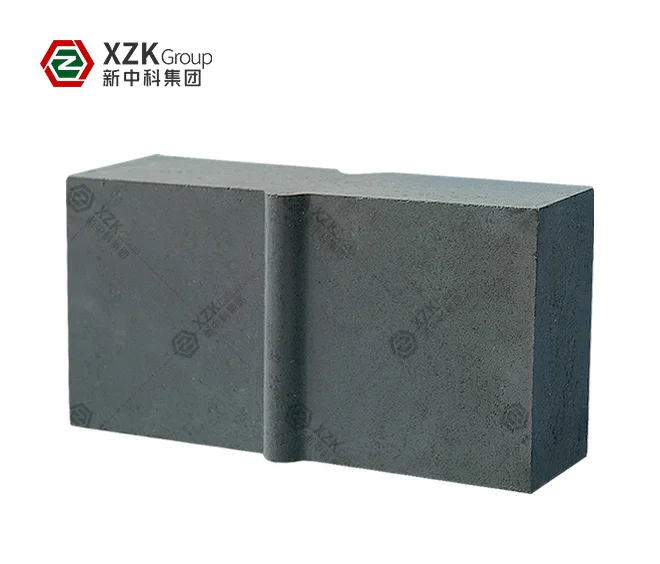
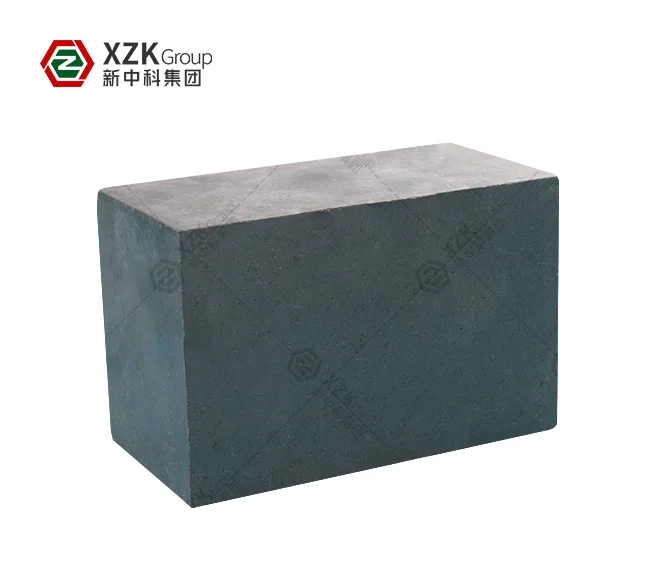
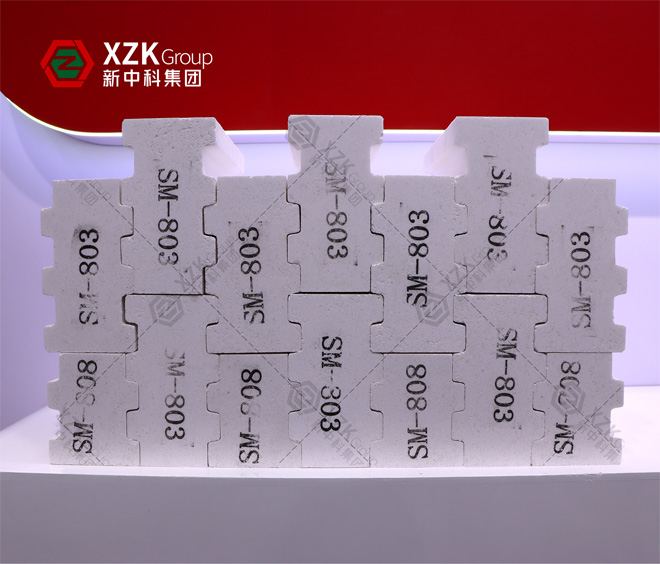
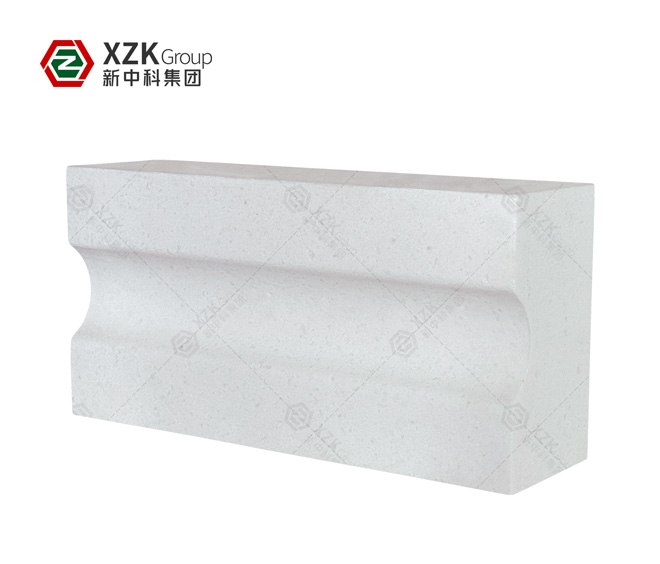
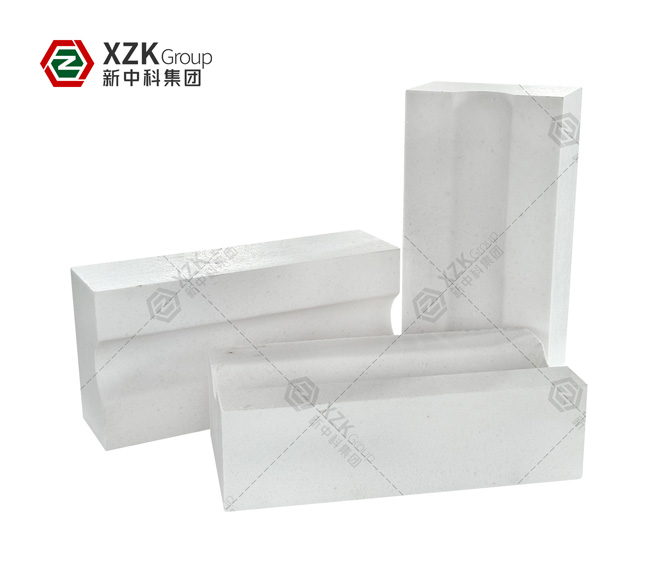
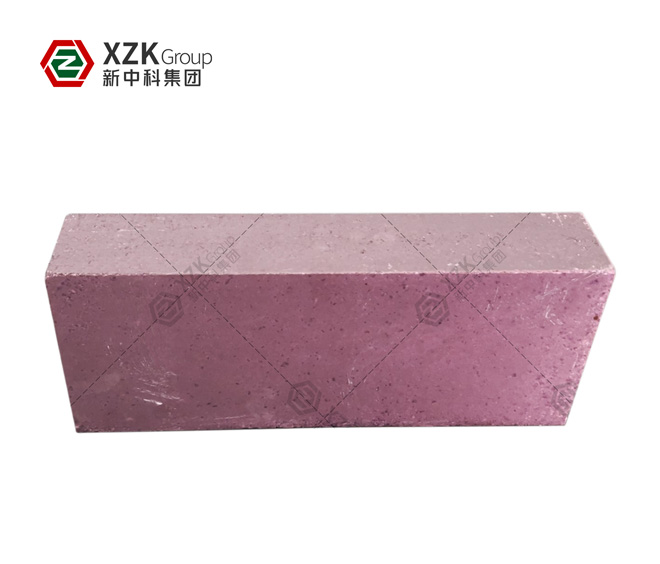
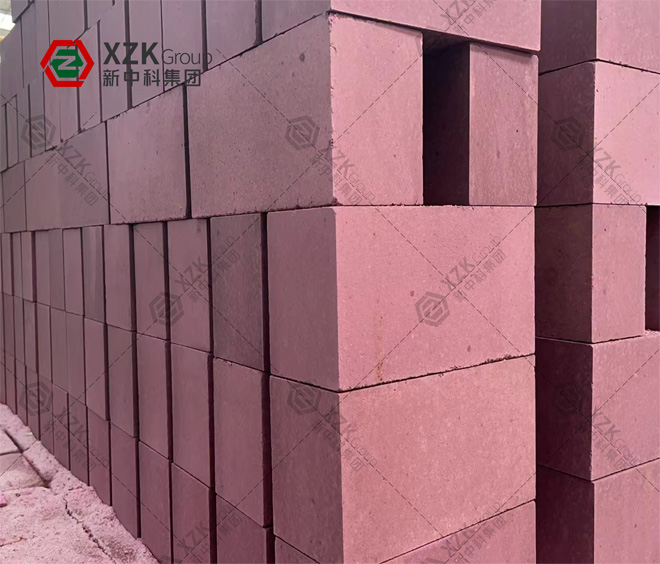
The chrome-zirconia-mullite brick is the patented Three-Resistant (3R) refractory: one brick engineered to resist spalling, erosion and thermal shock together, the three mechanisms that normally force a compromise in the combustion zone of a glass furnace. The body holds chromia, zirconia and a mullite-corundum matrix in a single dense structure.
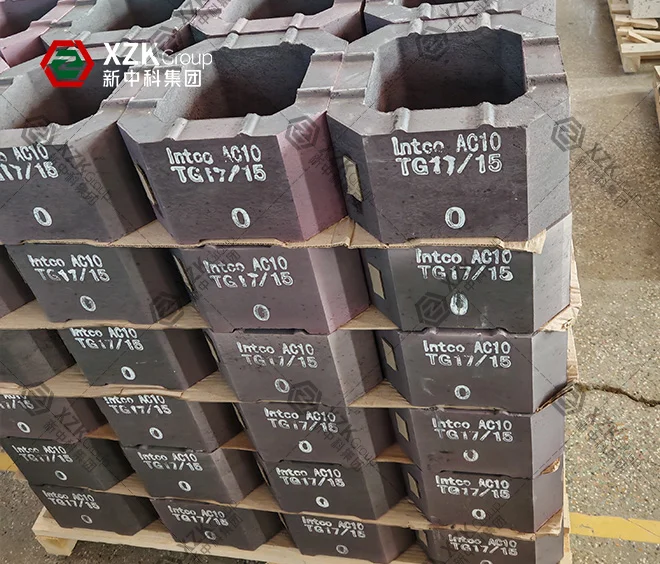
XZK's XZK-3R is protected by Chinese invention patent ZL201310431067.6. It is used at burner blocks, port necks, crown corners and regenerator hot zones, where chrome corundum alone would be limited by thermal shock and mullite alone by corrosion.
What Is a Chrome-Zirconia-Mullite Brick?
The three-resistant name states a mechanism, not a marketing claim. Corrosion resistance comes from chromia, which forms a solid solution in the corundum lattice, raises the refractoriness under load to at least 1700°C and suppresses wetting by glass melt, alkali and slag so that the corrosion reaction at the hot face is slowed at its source. Spalling resistance comes from the zirconia fraction: its phase transformation absorbs strain energy and arrests the microcracks that would otherwise link up and release a spall from the brick face. Thermal shock resistance comes from the mullite matrix, which accommodates rapid temperature change without the brittle fracture a monolithic corundum body would show. Each phase covers the weakness of the other two.
The composition is at least 70% Al2O3, at least 10% Cr2O3 and at least 7% ZrO2, with iron oxide held to 0.3%. Powder blending, pressing on CNC presses and a controlled high-temperature firing schedule bring the three phases into a dense body of 3.3 g/cm3 or more, with apparent porosity at 17% or below and cold crushing strength above 100 MPa. The balance between the phases is the difficult part of the process, because too much chromia costs thermal shock performance while too much zirconia costs strength.
The patent covers the composition and the manufacturing route that keeps those three phases in balance so that one resistance does not cost the others. In service the benefit appears at reversal. A burner block in a reversing furnace holds a flame face at the highest local temperature in the furnace and then meets cold combustion air, every 20 to 30 minutes, for the whole campaign. The 1100°C water-quench test gives at least 10 cycles for the 3R body while its refractoriness under load stays above 1700°C — a combination that neither a straight chrome corundum brick nor a mullite brick reaches on its own.
Key Properties
- Three resistances in one body — spalling, erosion and thermal shock — with each phase compensating for the weakness of the others.
- Al2O3 ≥ 70%, Cr2O3 ≥ 10% and ZrO2 ≥ 7% held in a single dense structure.
- Refractoriness under load ≥ 1700°C (0.2 MPa), keeping the brick dimensionally stable at burner and port temperatures.
- Cold crushing strength ≥ 100 MPa, bulk density ≥ 3.3 g/cm3 and apparent porosity ≤ 17%.
- Thermal shock resistance ≥ 10 cycles in the 1100°C water-quench test, matching the reversal cycle of the combustion system.
- Patented composition under Chinese invention patent ZL201310431067.6, covering both the body and its manufacturing route.








 WhatsApp
 WeChat
 WhatsApp
 WeChat