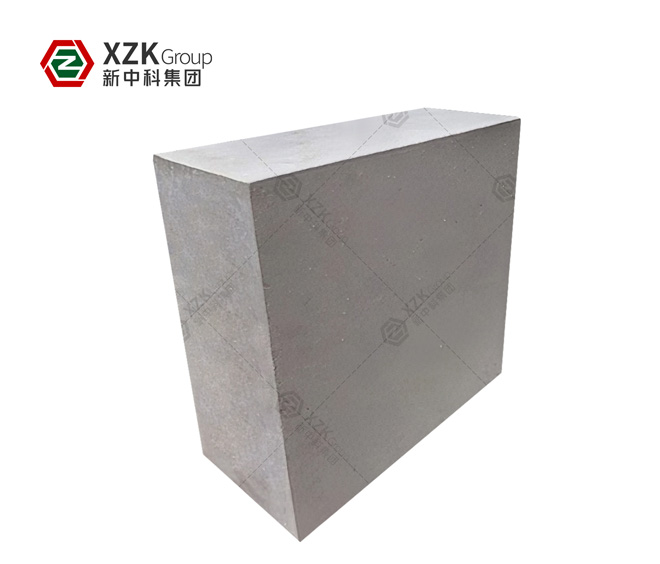
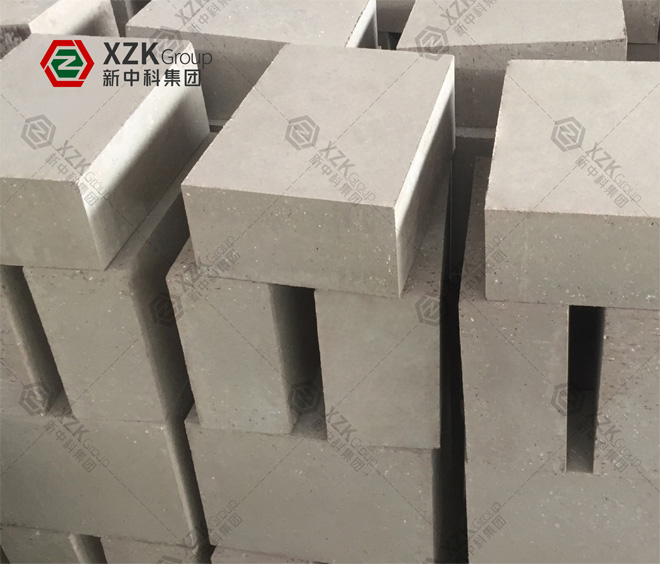
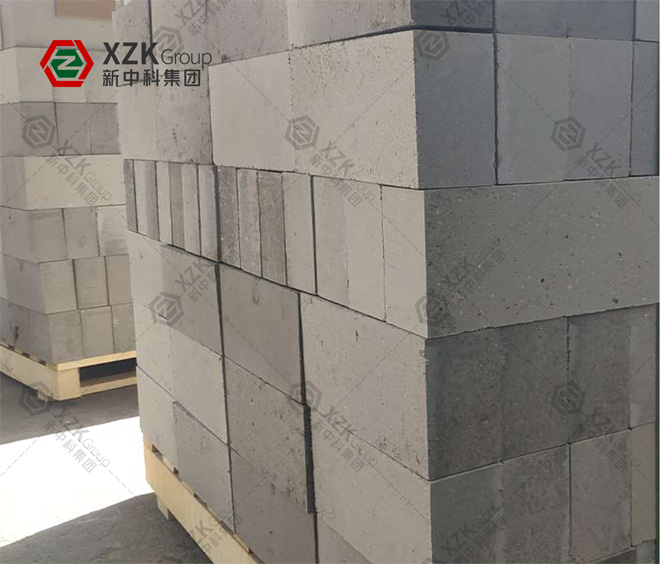
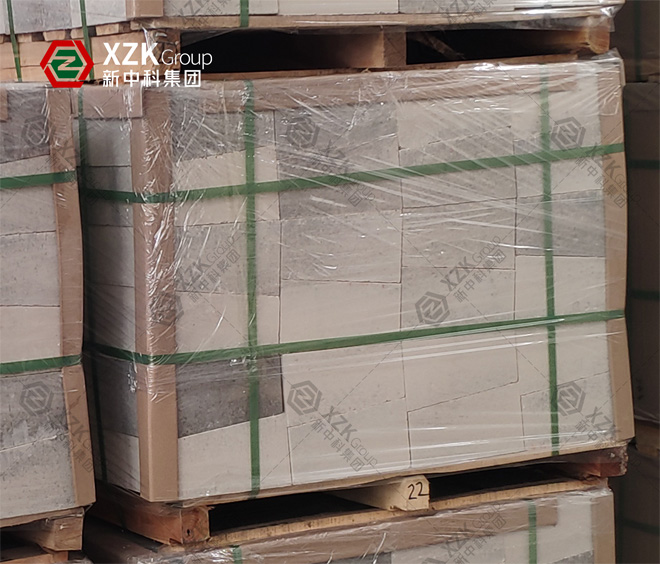
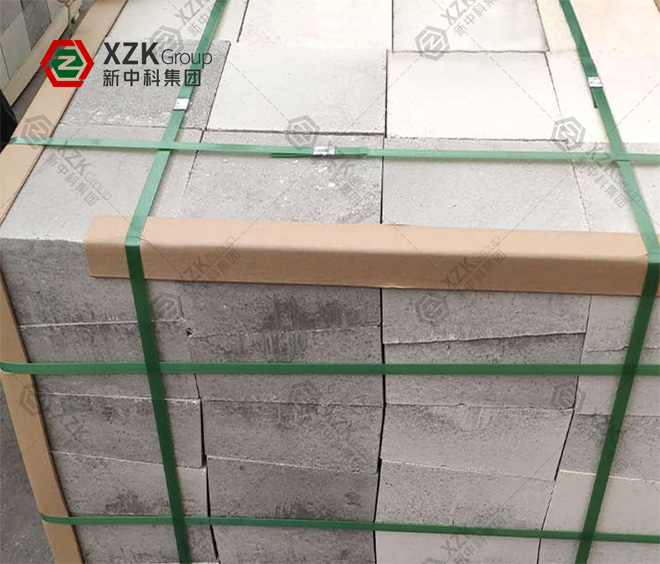
Phosphate-Bonded High Alumina Brick

Phosphate-Bonded High Alumina Brick

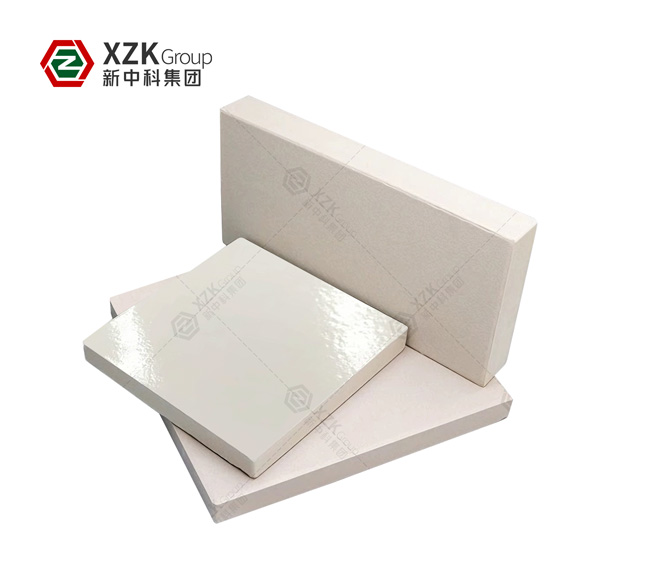
Phosphate-bonded high alumina bricks use a phosphoric acid or aluminium phosphate binder instead of a fired ceramic bond, and carry 75-77% Al2O3. The phosphate bond gives the brick high strength at moderate temperature and a low-expansion bond phase, so the material resists thermal shock and can...

Al₂O₃:75-77%
Bulk Density:2.650g/cm³
Cold Crushing Strength:≥60MPa
Feature:Wear resistant
Phosphate-Bonded High Alumina Brick

Phosphate-Bonded High Alumina Brick Overview

Phosphate-bonded high alumina bricks use a phosphoric acid or aluminium phosphate binder instead of a fired ceramic bond, and carry 75–77% Al2O3. The phosphate bond gives the brick high strength at moderate temperature and a low-expansion bond phase, so the material resists thermal shock and can be cured rather than fired — properties that suit burner blocks, port structures and repair work.

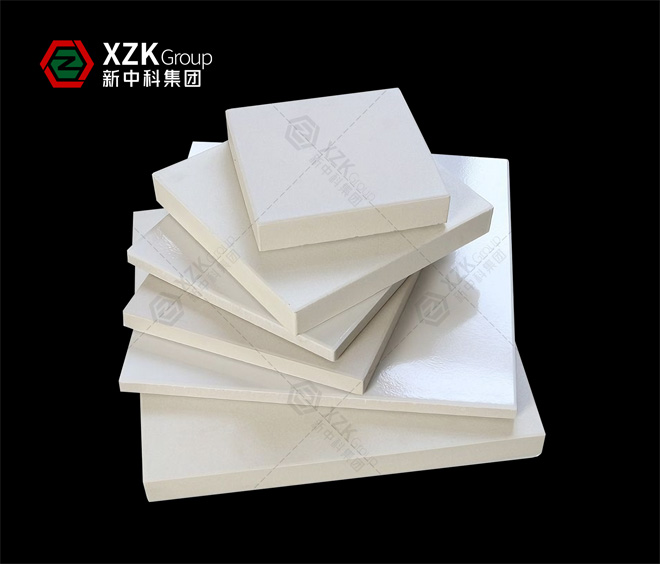
XZK Group supplies the phosphate series in first-class and qualified grades — XZK-P75, XZK-P75-Q, XZK-PA77 and XZK-PA77-Q — pressed from high-alumina aggregate with a controlled phosphate addition.

How a Phosphate Bond Works

In a conventional fired brick the bond is ceramic: the grains are held together by a glass or mullite phase that matures in the kiln. A phosphate-bonded brick works differently. Aluminium phosphate reacts with the alumina surface of the aggregate to form a network of aluminium orthophosphate that hardens as the brick dries and cures, and that develops further strength in service. The bond is formed chemically, not thermally.

That has two consequences. First, the brick reaches useful strength without a high-temperature firing, so phosphate-bonded shapes are often supplied as cured bricks or as rammed-and-cured linings; this is why they are common in complex shapes and in repairs. Second, the bond phase softens at a lower temperature than a mullitic ceramic bond, which is why the refractoriness under load of the series is 1250–1350°C, lower than a fired high alumina brick of the same alumina content.

What the phosphate bond buys in return is strength and thermal shock resistance. Cold crushing strength reaches 60–75 MPa, and the low-expansion bond handles rapid heating and cooling far better than a rigid ceramic bond. Phosphate-bonded bricks are therefore specified where thermal cycling, mechanical load and complex geometry matter more than the highest possible load-softening temperature.

Key Properties

  • Alumina content of 75–77% across four grades, with iron controlled to 3.2% Fe2O3 or below.
  • High cold crushing strength of 60–75 MPa, developed by chemical bonding rather than by firing.
  • Good thermal shock resistance, from a low-expansion phosphate bond that tolerates rapid heating and cooling.
  • Refractoriness under load of 1250–1350°C at 0.2 MPa, ample for combustion and structural zones below glass-contact duty.
  • Bulk density of 2.65–2.75 g/cm3, consistent with a pressed high-alumina body.
  • Supplied as pressed bricks or as cured shapes, allowing large or complex pieces that would be difficult to fire.

Technical Specifications

Technical Properties XZK-P75 (First-class) XZK-P75-Q (Qualified) XZK-PA77 (First-class) XZK-PA77-Q (Qualified)
Al₂O₃ (%) ≥ 75 ≥ 75 ≥ 77 ≥ 77
Fe₂O₃ (%) ≤ 3.2 ≤ 3.2 ≤ 3.2 ≤ 3.2
Cold Crushing Strength (MPa) ≥ 70 ≥ 60 ≥ 75 ≥ 65
Bulk Density (g/cm³) ≥ 2.70 ≥ 2.65 ≥ 2.75 ≥ 2.70
Refractoriness Under Load (0.2MPa, ℃) ≥ 1350 ≥ 1300 ≥ 1300 ≥ 1250

Test methods follow GB/T and ISO practice; ASTM equivalents and full certificates of analysis are issued with every shipment.

Available Grades and How to Choose

The series is split into a 75% alumina group (XZK-P75 and XZK-P75-Q) and a 77% group (XZK-PA77 and XZK-PA77-Q), and within each group into a first-class and a qualified grade.

Choose the first-class grade (XZK-P75, XZK-PA77) where the highest strength is required: cold crushing strength of 70–75 MPa and bulk density of 2.70–2.75 g/cm3. Choose the qualified grade (XZK-P75-Q, XZK-PA77-Q) for positions where slightly lower strength is acceptable and cost matters, such as backing courses. The 77% group gives both higher strength and a modest uplift in refractoriness under load over the 75% group.

Because the phosphate bond develops in service, the grade should be matched to the actual temperature of the position, and XZK confirms this against the furnace data rather than by rule of thumb.

Industry Applications

Extensively used in critical zones subject to thermal cycling and material abrasion, including:

  1. Cement rotary kilns (burning & transition zones)
  2. Metallurgical furnace linings
  3. Phosphate chemical processing furnaces

Where Phosphate-Bonded High Alumina Bricks Are Used in a Glass Furnace

Phosphate-bonded bricks are chosen for the parts of a glass furnace that combine thermal cycling with mechanical duty, in particular:

  • Burner blocks and burner port surrounds. The burner block sits in the hottest, most turbulent part of the flame path and cycles with every reversal; the phosphate bond tolerates that cycling better than a rigid fired bond.
  • Port neck and port floor. The small furnace arch and its support see high-velocity flame and repeated heating and cooling, and phosphate-bonded brick is a common working material there.
  • Doghouse breastwall and charging-end structures, where batch dust and thermal cycling combine and where a strong, readily repairable brick is an advantage.
  • Suspended wall and L-shaped suspended wall components. The bond gives the brick the strength to hang while resisting the cycling that a suspended structure undergoes.
  • Throat and waist wall backing, and repair zones. The low curing temperature means phosphate-bonded bricks can be installed and brought to temperature quickly when a furnace is repaired.

Manufacturing and Quality Control

Manufacturing is controlled from raw material through to finished brick. Four automatic batching lines feed 20 CNC presses ranging from 630 to 2000 tonnes, so density is set by press force rather than operator judgement, and firing runs through four 108-metre fully automatic tunnel kilns and five ultra-high-temperature shuttle kilns for a uniform soak.

Every batch is tested for bulk density, apparent porosity, cold crushing strength and refractoriness under load, and ships with a certificate of analysis. XZK Group holds ISO 9001, ISO 14001, ISO 45001 and ISO 50001 certification and operates the Henan Provincial Engineering Technology Research Center for Sintered Refractories for Glass Furnaces.

Related Refractory Products

Phosphate-bonded bricks are supplied with SK series high alumina bricks, low porosity fire clay bricks, high alumina castables and refractory mortars. See the alumina-silicon bricks range or browse all refractory products.

Proven Global Projects

About XZK Group

Strengths
Innovation
R&D Team
Facilities
Honors
Product Portfolio
Specializing in premium zircon, corundum, sintered AZS, and monolithics. With a $70M+ annual output, we deliver durable linings for global high-temp industries.
Capacity
✔ 4 automated microcomputer batching systems.
✔ 4 ultra-high-temp tunnel kilns & 5 shuttle kilns.
✔ 20+ CNC hydraulic presses (630-1500T).
✔ Digitalized workshops with 100,000T annual capacity.
Core Strengths
Core Strengths
Core Strengths
Core Strengths
Core Strengths
💡
93 patents, featuring the "Tri-Resist Brick" for glass kilns. Field-proven for superior corrosion and thermal shock resistance.
📜
Co-authored multiple National Standards for Andalusite, Chrome-Corundum, and Zircon bricks with CBMA.
🤝
Strategic partner to Fortune 500 leaders: China Baowu, CNBM, CSG, Xinyi, and Kibing Glass.
Tech & Innovation
Tech & Innovation
Tech & Innovation
Expert R&D Team
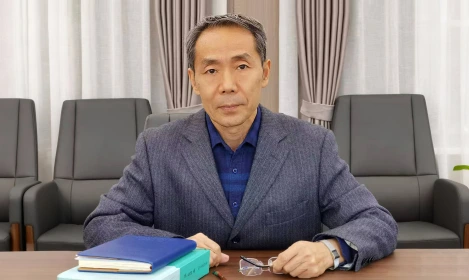
Led by Prof. Shi Gan, our 40+ engineers leverage advanced testing centers to drive innovation in green refractory technologies.
Professor Shi Gan
Prof. Shi Gan
Chief Scientist
Senior Engineer & National Expert (State Council Allowance).
Key drafter of 5+ national refractory standards.
Inventor of "Tri-Resist Brick", maximizing glass furnace lifespan.
R&D Center
Laboratory Equipment
Zhongke Refractories
Insulating Materials Base: Alumina Bubble, Mullite, High-Alumina & Fireclay bricks.
Zhongke New Materials
Special Refractories Base: Chrome-Corundum, Tri-Resist, and Low-Porosity bricks.
Henruida New Materials
Premium Refractories Base: Zircon, Corundum, Sintered AZS, and monolithics.
Zhengzhou Zhongke Refractories Co., Ltd. Zhengzhou Zhongke New Materials Co., Ltd. Zhengzhou Henruida New Materials Co., Ltd.
Certifications & Honors

Certified by ISO 9001, 14001, 45001, 50001 Management Systems.

Honored as:

  • National High-Tech Enterprise
  • Specialized & Innovative SME
  • Provincial Green Factory
  • Grade A Environmental Enterprise
Certifications & Honors
Beginning with professional consultation to accurately identify and address specific requirements
One-to-one Service
We offer one-on-one dedicated sales and technical team services to perfectly solve any refractory material problems you encounter
Professional Solution
The company has over 30 technical R&D personnel and can provide professional solutions based on the on-site conditions of customers
Quality Management System
We have a strict quality management system to ensure the stability of the quality of each batch of products.
Responsible After-sales Service
Our dedicated technical team will visit customers regularly and provide free lifetime after-sales service
leave a message for refractory
Contact Us
Phone/WhatsApp/Wechat: 0086 19059612888
Add: Micun & Laiji Refractory Industry Zone, Xinmi City, Henan Province, China
WhatsApp of XZK refractory WhatsApp
WeChat of XZK refractory WeChat

Leave a message
Please submit your inquiry using the form provided below. We will offer you a solution and quotation within 24 hours.

    CONTACT US
    To ensure we provide you with the best possible
    solution, please share:
    1. Type of refractory product you are interested in.
    2. Specific requirements (e.g., dimensions, quantity, using temp).
    3. Your industry or application area – this helps us
    tailor the ideal solution for you.
    Tel/WhatsApp/Wechat:
    0086 19059612888
    WhatsApp
    WeChat
    LEAVE A MESSAGE
    Please feel free to submit your inquiry using the form provided below, and we will provide you with a quote within 24 hours.

      WhatsApp

      WhatsApp ID: +86 190 5961 2888

      Email
      WeChat

      WeChat ID: +86 190 5961 2888

      Telephone