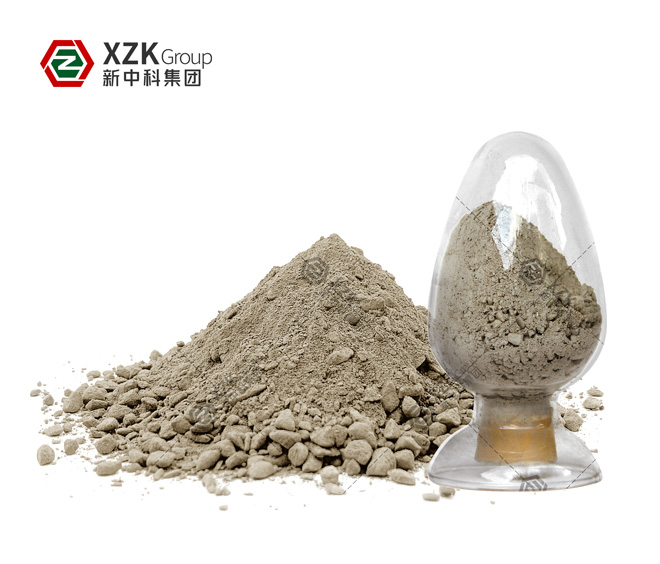
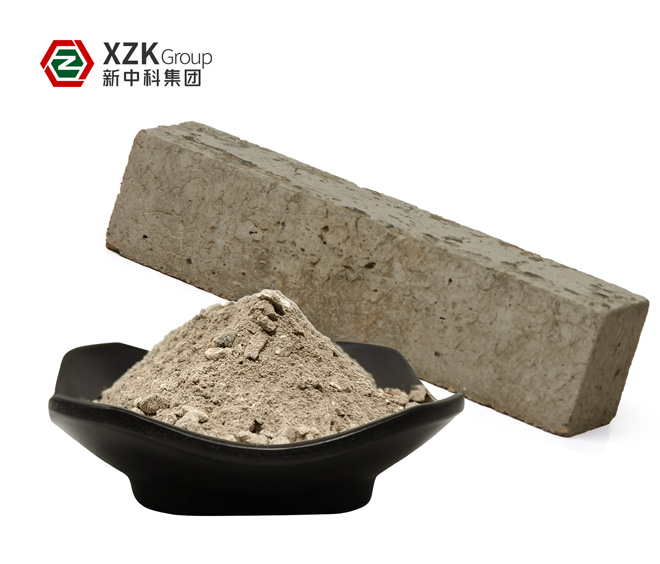
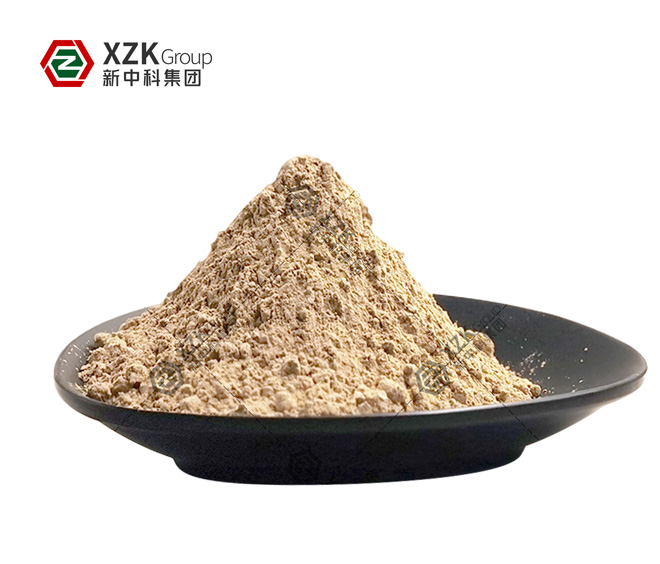
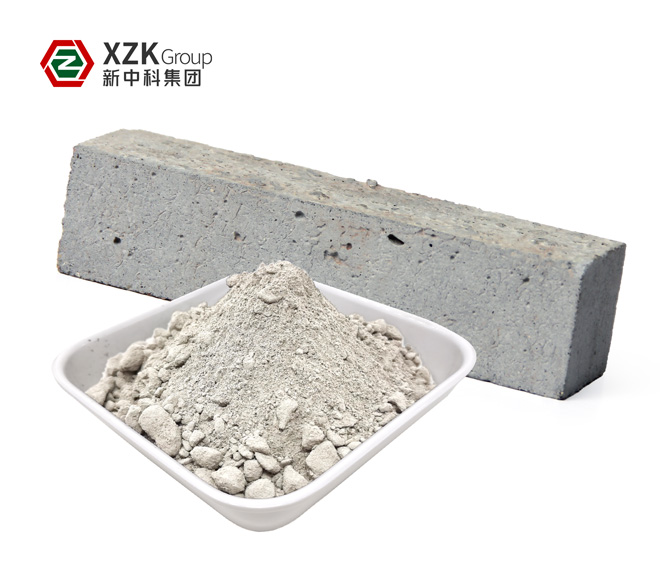
Zircon ramming mass is a dry, graded zircon mix that is compacted into place with pneumatic rammers rather than cast. With a ZrO2 content of 63% or more and a rammed bulk density of at least 3.3 g/cm3, it forms the sealing layer beneath the tank bottom paving — the barrier that stops molten metal and glass from drilling upward through the bottom structure.
XZK Group supplies the grade as XZK-RM-ZR. It is a tank bottom material: it is rammed under the zircon paving and between the joints of the bottom blocks, and it is not exposed as a wearing surface.
What Is Zircon Ramming Mass?
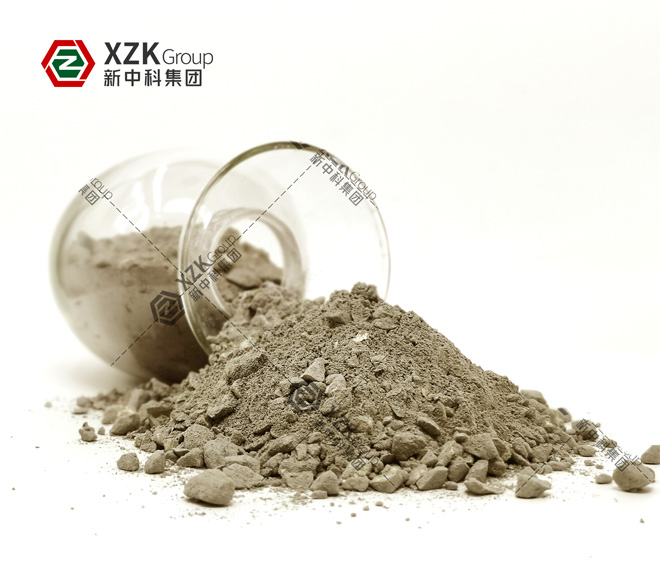
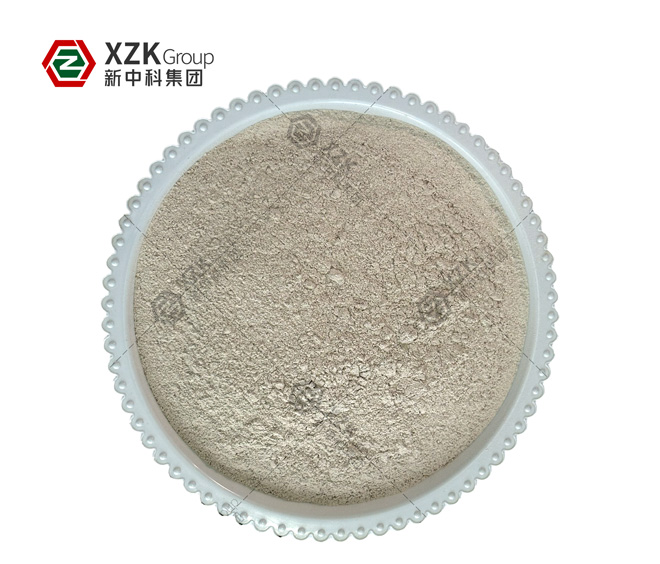
The mix is a full particle-size distribution of zirconite grains up to 5 mm, a fines fraction and a small temporary binder, supplied dry and used dry. There is little or no water in the system, so the material does not flow like a castable; it is placed in thin layers, each compacted with a pneumatic rammer until it is dense, and the layers build into a continuous seal. Compositionally the grade is zircon-dominated, with ZrO2 at 63% or above and a maximum particle size of 5 mm.
The decisive property is compaction density. A ramming mass derives its impermeability from mechanical compaction rather than from a cement bond, so density is the quality that has to be controlled at the point of installation. A layer rammed to 3.3 g/cm3 or more has a closed, low-permeability structure; the same mix placed in thick layers or under-rammed stays open, and an open layer gives molten metal and glass a path straight through. This is why ramming procedure, layer thickness and rammer energy are written into the installation method statement and checked on site.
In service the compacted layer sinters on heat-up into a tight, glass-resistant mass that is almost inert to molten glass. Heavy metal contaminants that settle on the paving above cannot penetrate it, and the layer also closes the joint network between the bottom blocks below. Cold crushing strength rises from 20 MPa or more at 110°C to 50 MPa or more after 1200°C as the bond develops.
Key Properties
- ZrO2 content: 63% or above in XZK-RM-ZR, giving high density and strong resistance to glass and metal.
- Rammed bulk density: 3.3 g/cm3 or more — the figure that determines whether the layer actually seals.
- Cold crushing strength: 20 MPa or more after drying at 110°C, rising to 50 MPa or more after 1200°C.
- Maximum particle size: 5 mm, sized so the layer compacts densely around bottom blocks and penetrations.
- Placement: dry, layer by layer with pneumatic rammers; no water and no formwork.
- Function: a sealing layer, not a wearing surface — it is protected by the paving above it.








 WhatsApp
 WeChat
 WhatsApp
 WeChat